
CF8, CF8M and CF3M, Austenitic Stainless Valve Bodies
The austenitic stainless grades are the chemical industry default. The difference between the 304-family and 316-family castings is molybdenum, and it matters.
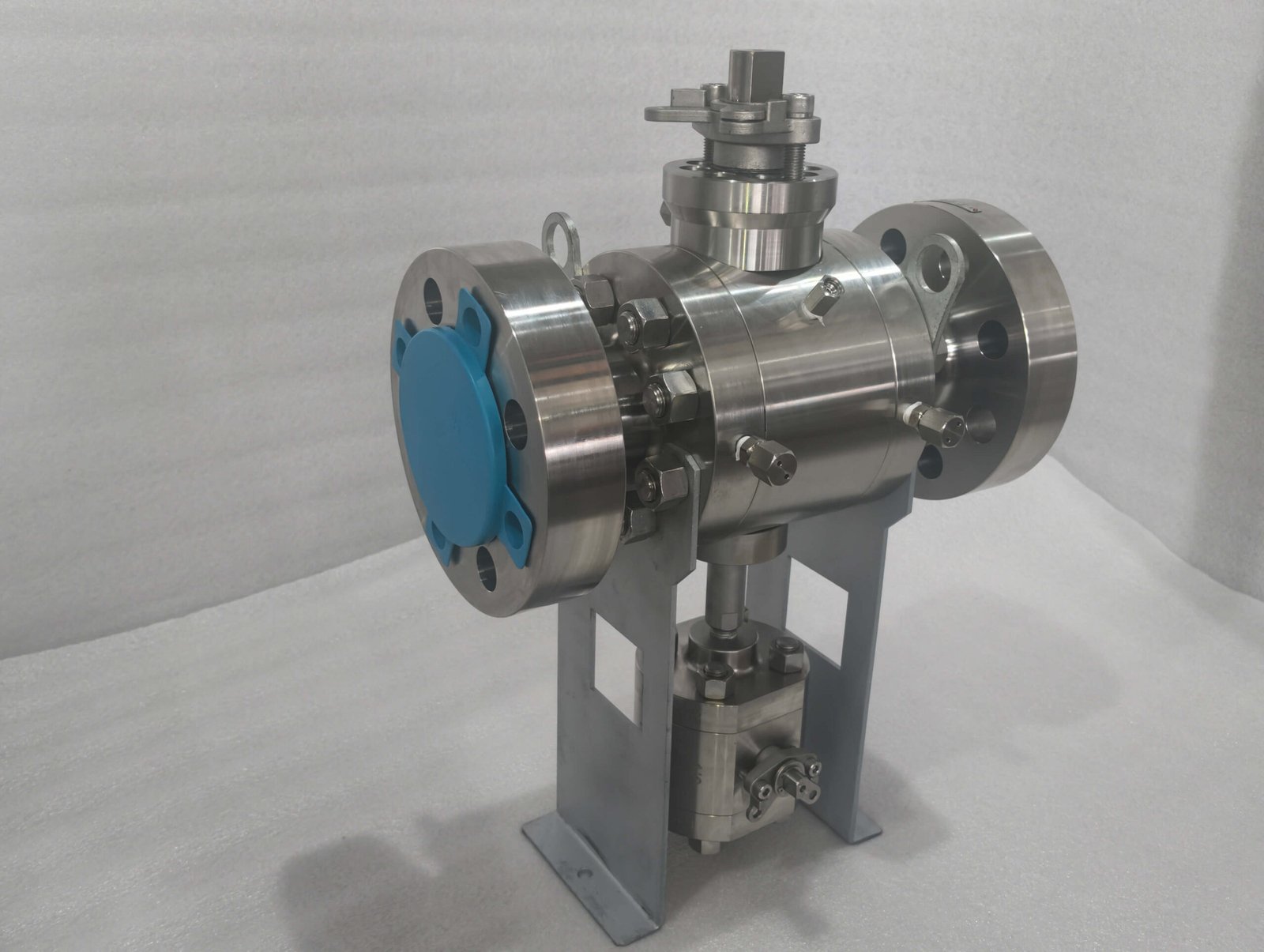
CF8, CF8M and CF3M, Austenitic Stainless Valve Bodies
CF8 and CF8M are cast austenitic stainless steels used for valve bodies in chemical and process service. CF8 corresponds to the 304 family and CF8M to the 316 family, and the difference between them is the molybdenum that improves resistance to chlorides and to reducing acids.
CF3M is the low-carbon version of CF8M, used where welding is extensive or where intergranular corrosion is a concern. The three grades are often listed together because they are chosen for the same kinds of duty.
What molybdenum buys
The addition of molybdenum in CF8M improves resistance to chlorides and to a range of reducing acids. In practice this is why 316-family castings are the default for chemical plant service while 304-family castings appear where the medium is milder.
It does not make the grade immune to chlorides. In hot, concentrated chloride service the austenitic grades are vulnerable to stress corrosion cracking, and a duplex grade is usually the better answer.
The low-carbon variant
CF3M exists because carbon in the region of a weld can form chromium carbides and leave the surrounding metal short of chromium. In a heavily welded fabrication that can mean intergranular corrosion adjacent to the weld.
For a valve body the welding is usually limited, so CF8M is common. Where the body is heavily fabricated or the service is aggressive, CF3M removes the concern.
Erosion and galling
Austenitic stainless grades are softer than carbon steel, so they erode faster where the medium carries solids at velocity. On abrasive service the answer may be a harder alloy or a hard-faced trim rather than a stainless body with a soft seat.
Galling is the other practical issue: stainless against stainless under load can seize. That is why stems and seats are often specified in different alloys or with a surface treatment.
The Three Grades
| Item | Detail | Note |
|---|---|---|
| CF8 | 304-family casting | Milder media; lower cost |
| CF8M | 316-family with molybdenum | Chlorides and reducing acids; the process default |
| CF3M | Low-carbon CF8M | Heavily welded or corrosion-sensitive fabrications |
| Limit shared by all three | Hot chloride stress corrosion cracking | Duplex grades where the service demands it |
| Also watch | Erosion (softer than carbon steel) and galling | Hard-facing or dissimilar alloys on trim |
From the works and the projects
Questions this page answers
CF8M is the cast equivalent of the 316 family. The chemistry and behaviour are comparable, which is why the grade appears wherever a wrought 316 valve would be acceptable.
With care. Chloride stress corrosion cracking and pitting are real risks, and duplex or super duplex grades are normally the better answer for seawater duty.
Stainless against stainless under load can seize. Trim is often specified in a different alloy or with a surface treatment to avoid it.