
Gaskets, Packing and Bolting, The Items That Leak
The pressure boundary rarely fails at the casting. It fails at the joints, and the joints are made of gaskets, packing and bolts.
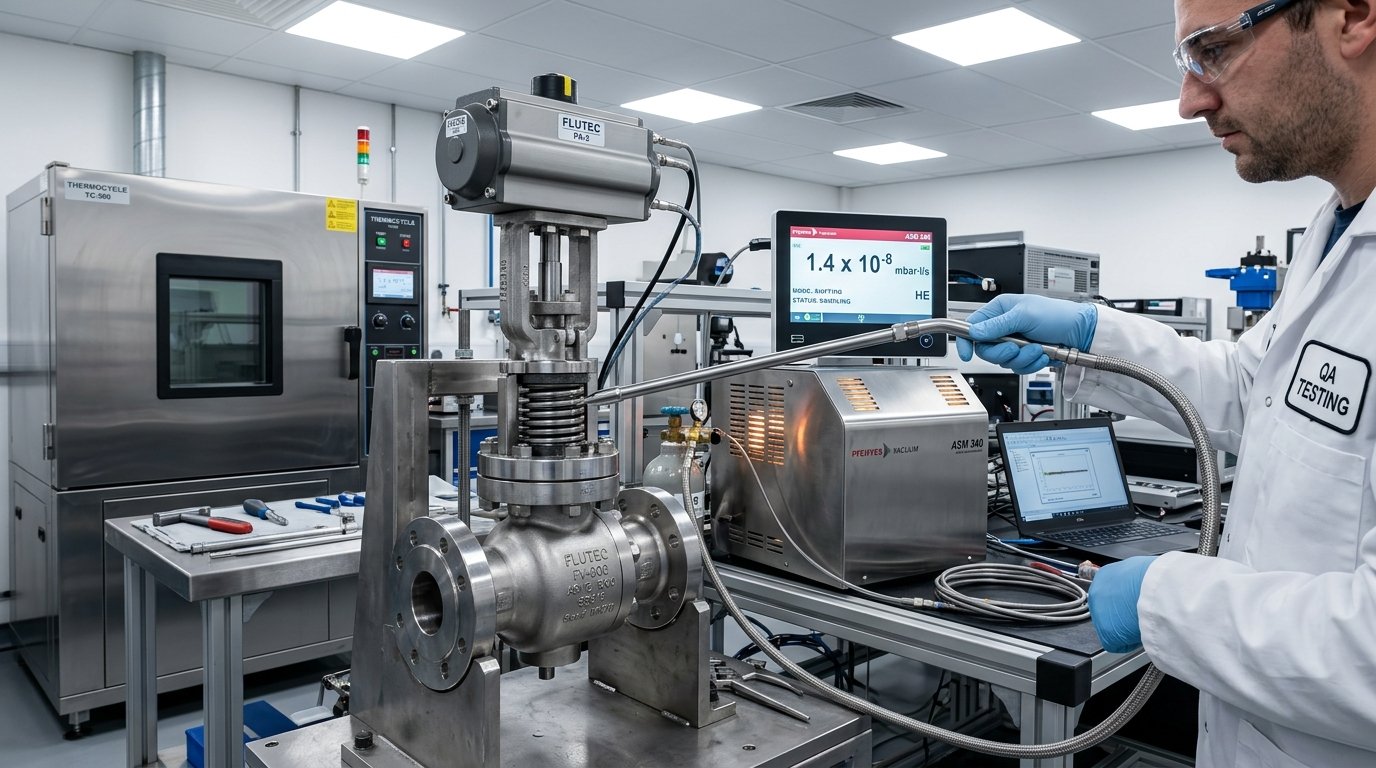
Gaskets, Packing and Bolting, The Items That Leak
A valve body is a casting proved by a shell test. The joints around it are assemblies of three materials with three different expansion rates, and they are where leaks in service actually start.
That is why packing and gasket selection deserves the same attention as the body grade, and why the bolting material has to be considered separately from the flange material on a hot line.
The body gasket
A spiral wound gasket with a graphite or PTFE filler covers a very wide range of service and is the usual choice for steel valve bodies. Soft gaskets suit lower pressure and temperature, and ring joint gaskets are used where a soft gasket cannot be relied on.
The gasket has to suit the medium as well as the temperature. A PTFE filler that is perfect for a chemical service may be the wrong choice on a hot hydrocarbon line, and a graphite filler that handles the temperature may not suit an oxidising medium.
Stem packing
Packing seals the moving stem, so it has to tolerate both pressure and movement. Graphite packing handles high temperature; PTFE-based packing seals better at lower temperature and is easier to adjust.
A back seat on the stem lets the packing be renewed with the valve in the line, and it is the reason a back seat is worth checking on the datasheet. Without it, packing renewal means taking the valve out of service.
Bolting is a separate material decision
Bolts operate at the temperature of the joint and they carry the load that compresses the gasket. On a hot line their strength falls with temperature, and that is why bolting material is selected separately rather than being inherited from the flange.
Where the joint sees thermal cycling, the bolts relax over time and the joint has to be re-tightened to a procedure. On a cold line, a joint that is correctly made up once is usually sufficient.
Joint Materials
| Item | Detail | Note |
|---|---|---|
| Spiral wound gasket | Wide pressure and temperature range | The usual steel valve body gasket |
| Soft gasket | Lower pressure and temperature | Chemical and utility service |
| Ring joint gasket | High pressure and temperature | Needs the matching groove in the mating flange |
| Graphite packing | High temperature | Adjustable, tolerant of the environment |
| PTFE-based packing | Lower temperature, tighter sealing | Easier to adjust |
| Bolting | Selected for the joint temperature | Not the same choice as the flange material |
From the works and the projects
Questions this page answers
At the joints: the body gasket, the stem packing and the bolted flange. The casting itself is proved by the shell test, and the joints are where thermal movement is absorbed.
It lets the stem packing be renewed while the valve is still in the line under pressure. It is worth confirming on the datasheet where packing maintenance matters.
Spiral wound and ring joint gaskets are normally replaced rather than reused. Reusing a compressed gasket is a common cause of a joint that weeps after reassembly.