
Cavitation and Flashing in Control Valves
Cavitation and flashing are the same beginning with different endings, and the difference decides which fix works.
Cavitation and Flashing in Control Valves
Cavitation and flashing are the same beginning with different endings, and the difference decides which fix works.
What it looks like on site
Rattling or a sound like gravel in the valve, with erosion damage appearing after a few weeks or months of service.
The causes, in order of likelihood
- Pressure drop too high across one restriction. The pressure falls below the liquid's vapour pressure, bubbles form, and they collapse downstream.
- Flashing service. The downstream pressure stays below vapour pressure, so the bubbles never collapse and the flow leaves as a mixture.
- Undersized trim. A small trim working at a large pressure drop puts the whole reduction into one stage.
- Wrong valve type for the duty. A globe valve pressed into a service that needed a multistage or anti-cavitation trim.
Cavitation against flashing
In cavitation the pressure recovers downstream and the vapour bubbles collapse, and the collapse against the metal is what removes material. In flashing the downstream pressure never recovers above vapour pressure, so the bubbles stay and the valve passes a two-phase mixture.
The distinction matters because the fixes differ. Cavitation is attacked by staging the pressure drop; flashing has to be addressed by material selection and by accepting the erosion as a design condition.
Where the damage appears
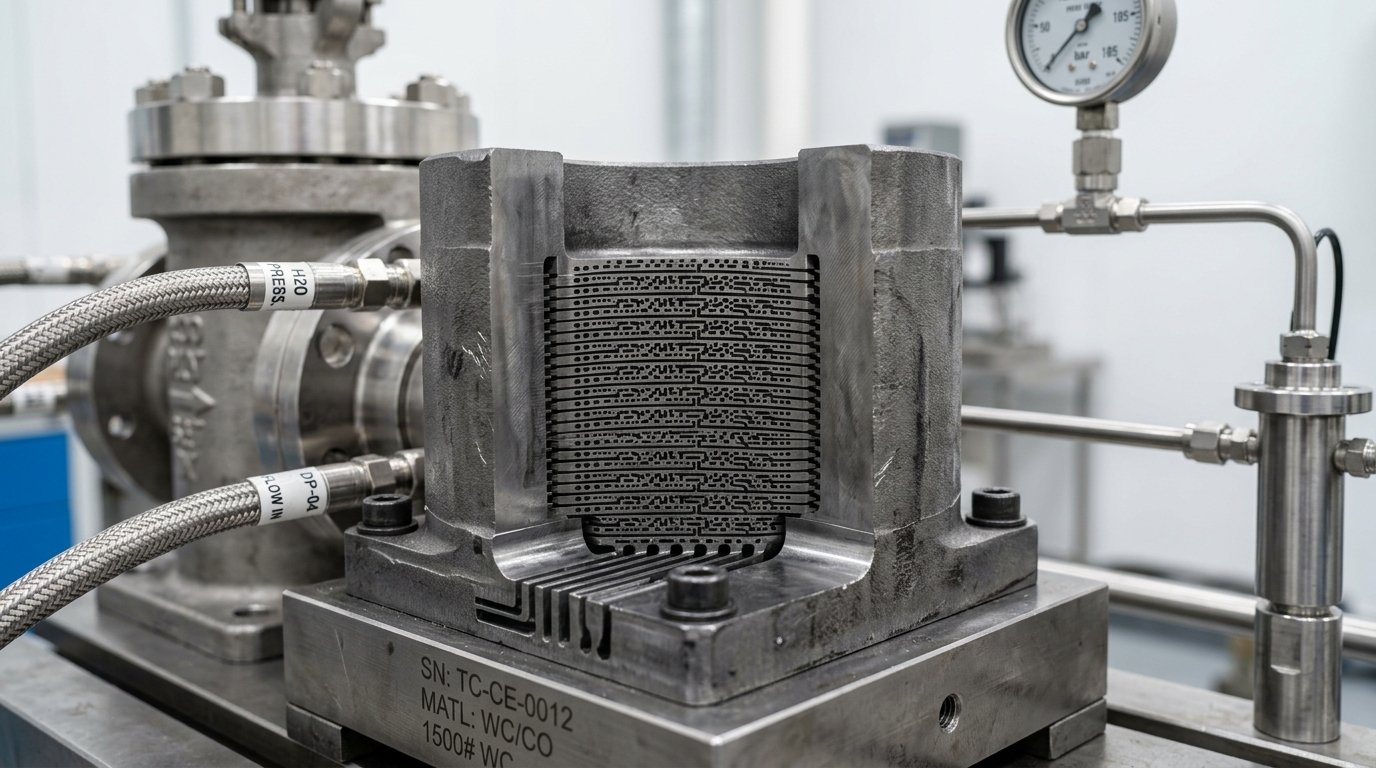
Cavitation damage is characteristically downstream of the seat, often on the body wall and on the plug, and it looks like a rough, sponge-like surface rather than a clean cut.
Flashing damage is more evenly distributed and often extends further downstream into the pipe, because the two-phase mixture is still accelerating and still eroding as it leaves.
What can be done
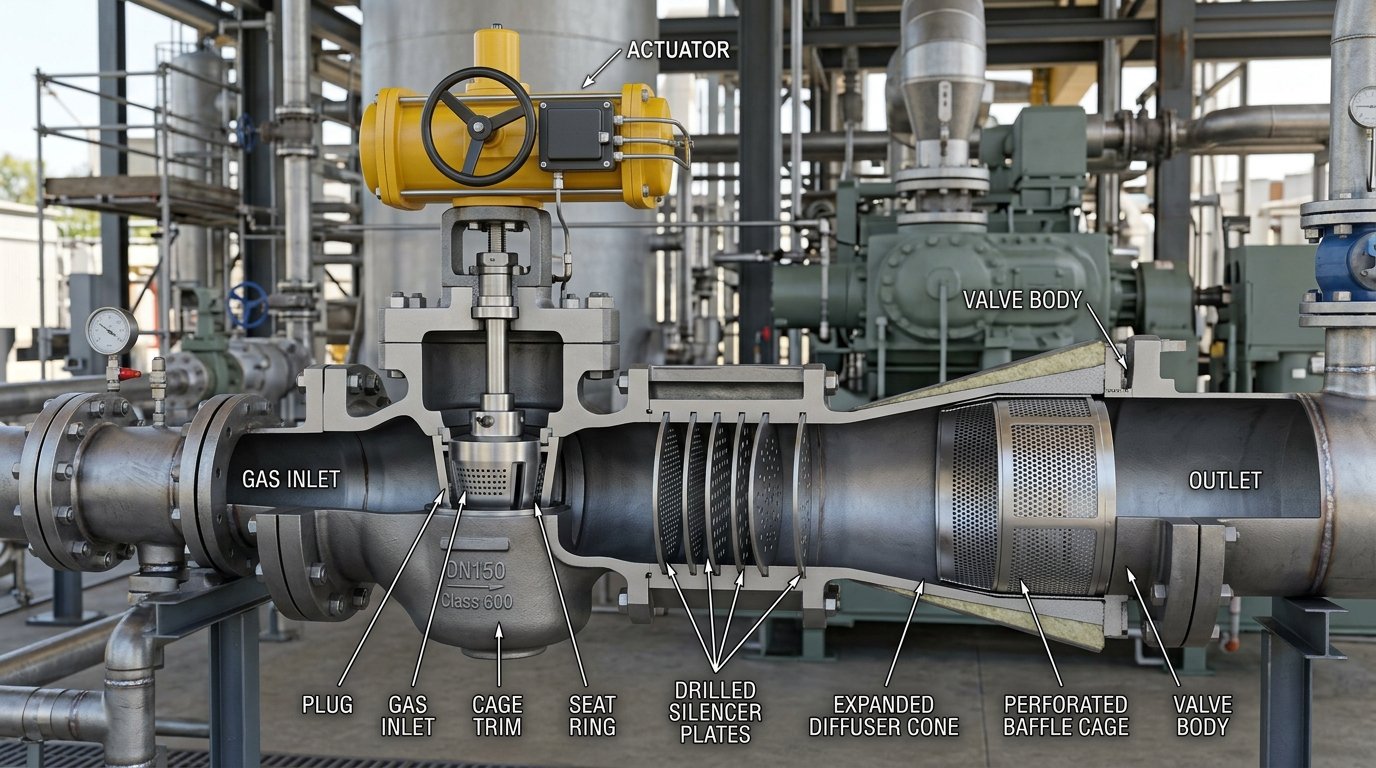
Changing the trim is the first answer: a staged pressure reduction spreads the drop across several restrictions so no single stage drops the pressure below vapour pressure. Low-noise trims often help as a side effect.
Where the duty cannot be changed, the materials can be hardened, and the service life is set by the erosion rate. That is a legitimate engineering answer, and it should be stated as one rather than presented as a cure.
Cavitation Or Flashing
| Item | Detail | Note |
|---|---|---|
| Downstream pressure above vapour pressure | Cavitation: bubbles collapse in the valve or just after it | Stage the pressure drop |
| Downstream pressure stays below vapour pressure | Flashing: bubbles remain, two-phase flow | Select materials for erosion; accept the condition |
| Symptom | Rattling, gravel-like noise, damage near the seat | Rumbling, damage extending downstream |
| Damage pattern | Rough, pitted surface close to the seat | Erosion over a wider area and further downstream |
| First remedy | Anti-cavitation or multistage trim | Hardened trim, and a review of the process condition |
The checks, in order
Establish the pressure profile
Upstream, vena contracta and downstream pressures, against the vapour pressure at the flowing temperature.
Confirm the noise character
Gravel-like rattle suggests cavitation; a sustained rumble suggests flashing.
Map where the damage is
Near the seat points to cavitation; further downstream points to flashing.
Review the trim
A single-stage trim at a large pressure drop is the usual finding.
Check the operating case
Many cavitating valves are simply working at a lower flow than they were sized for.
From the works and the projects
Questions this page answers
By the downstream pressure relative to the vapour pressure. If it recovers above vapour pressure, the bubbles collapse and you have cavitation; if it does not, you have flashing.
Not by itself. What reduces cavitation is spreading the pressure drop across multiple stages, which is a trim design question rather than a size question.
The trim can be replaced, often with an anti-cavitation design. The body should be inspected at the same time, because cavitation damage to the wall is not always visible from outside.