
Stem Packing Leak
Tightening the gland is the first reaction and it is sometimes right. It is also how a repairable leak becomes a scored stem.
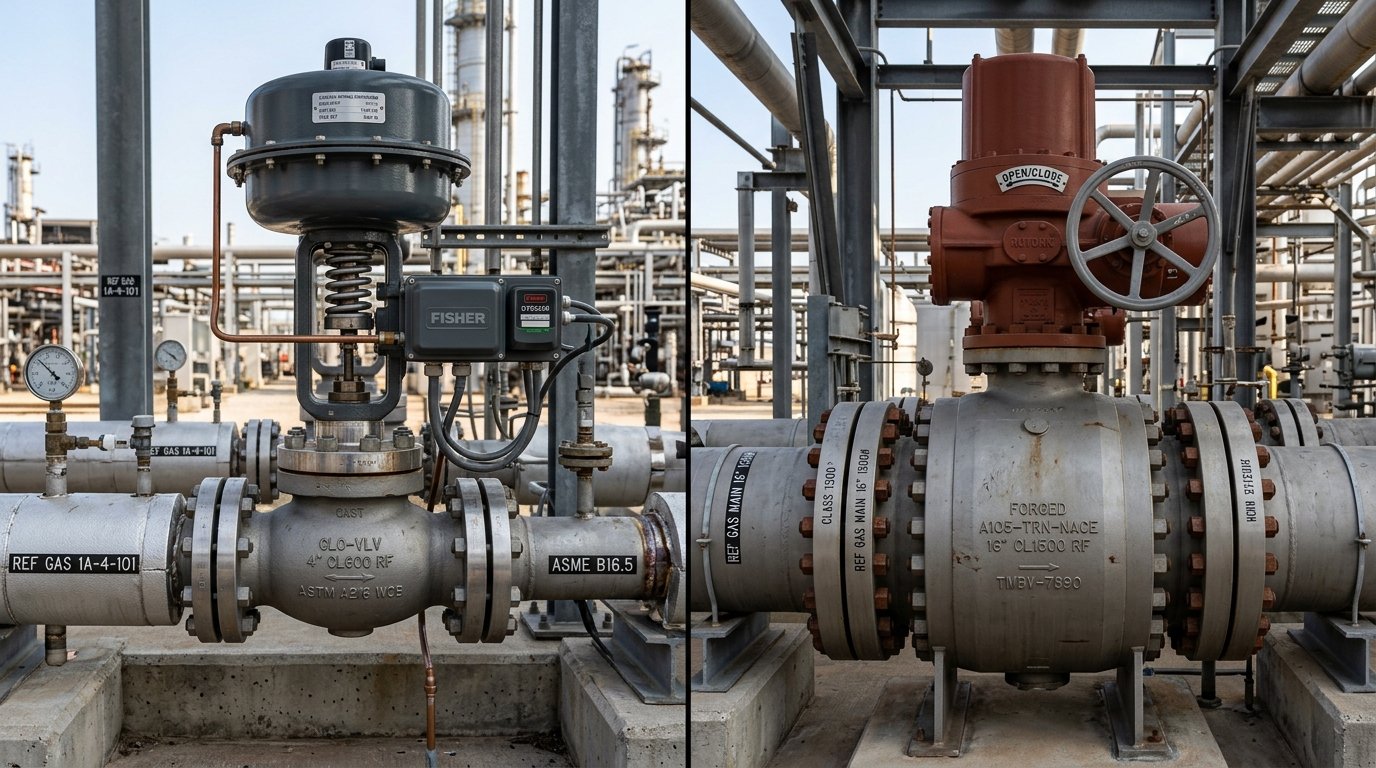
Stem Packing Leak
Tightening the gland is the first reaction and it is sometimes right. It is also how a repairable leak becomes a scored stem.
What it looks like on site
A weep or drip from the packing gland, or a visible plume on a hot line.
The causes, in order of likelihood
- Packing relaxed after thermal cycling. The bolts and the packing relax over cycles, and the load that compressed the packing is lost.
- Over-tightened at the last intervention. Excessive gland load crushes the packing and scores the stem, which then leaks worse than before.
- Worn or degraded packing. Age, temperature and chemical attack reduce the packing's ability to seal.
- Scored or corroded stem. A rough stem surface cannot be sealed by any packing.
- Misaligned gland. A gland tightened unevenly loads one side of the packing and leaves the other loose.
Treat the leak as a maintenance task, not an emergency
On a hot line, a stem packing leak is a personnel hazard and a housekeeping problem. The correct response is planned, not reactive: a gland that is tightened in a hurry during a plant upset is often the reason the valve needs a stem later.
Where the valve has a back seat, the packing can be renewed with the valve in the line under pressure. That is the designed route for this maintenance, and it is the reason a back seat should be on the datasheet.
Adjustment procedure matters
Tighten evenly, in small increments, and check the effort needed to operate the valve after each. The objective is the least gland load that stops the leak, not the maximum load the gland will take.
If the leak does not stop within a reasonable amount of gland travel, stop. Continuing to tighten compresses the packing against the stem, and the resulting scoring creates a leak that no amount of packing will seal.
When the packing is not the problem
A leak that returns within hours of adjustment is usually a stem surface problem. A leak that appears only at temperature is usually a packing material selection problem, which is why graphite and PTFE packings behave differently on the same line.
A leak that is worse on one side of the stem points at gland alignment. Repacking the valve without correcting the alignment reproduces the fault.
Treatment By Symptom
| Item | Detail | Note |
|---|---|---|
| Weep returns soon after adjustment | Stem surface damaged | Inspect and replace the stem |
| Leak appears only when hot | Packing material not suited to the temperature | Change to a graphite-based packing |
| Leak worse on one side | Gland or yoke misalignment | Correct alignment before repacking |
| Leak after a long idle period | Packing dried or relaxed | Re-load the gland, then review the packing |
| Leak after an intervention | Over-tightening at the previous visit | Set the gland load to the assembly figure |
The checks, in order
Identify the leak path
Confirm it is the packing and not a body joint or the bonnet gasket.
Check the line is safe to work on
Temperature, medium and the valve's design both matter before any adjustment.
Adjust in small increments, evenly
Stop as soon as the leak ceases; do not continue to full gland travel.
Operate the valve after adjusting
Confirm the operating effort is still reasonable.
If it returns, plan a repack
Use the back seat or take the valve out of service.
From the works and the projects
Questions this page answers
Yes, where the valve has a back seat. The valve is fully opened to seat the back seat and the packing is then renewed. Without a back seat, the line has to be isolated.
Over-tightening crushes the packing and can score the stem. A scored stem cannot be sealed by new packing, which is why the gland should be loaded to the assembly figure rather than as far as it will go.
A graphite-based packing, subject to the medium. PTFE-based packing seals better at lower temperature and is easier to adjust, but its temperature band is narrower.