
Carbon Steel vs Stainless vs Duplex for Valve Bodies
The body material is chosen against the medium, not against the price list. The differences that matter are corrosion, strength at temperature, and cost.
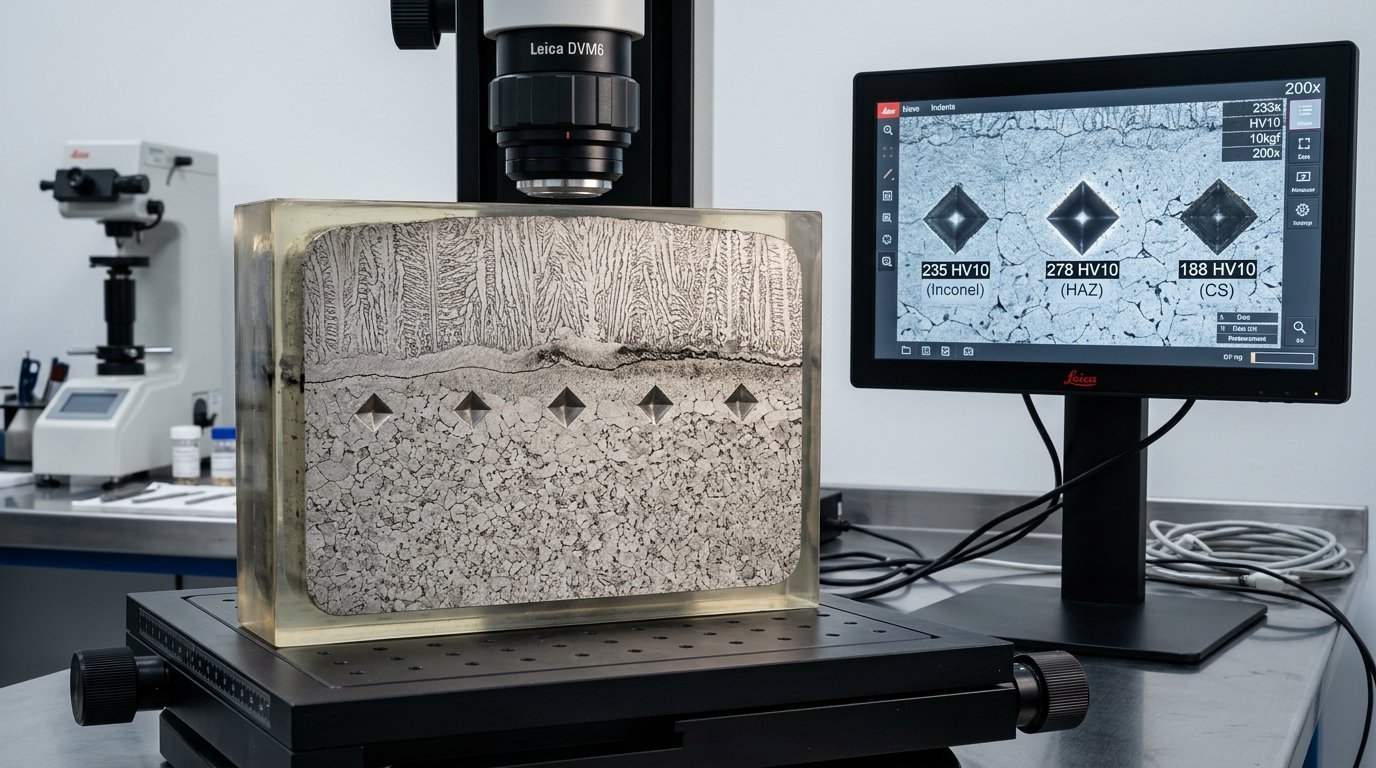
Carbon Steel vs Stainless vs Duplex for Valve Bodies
Carbon steel is the default because it is strong, weldable, well understood and cheap. It is also the grade that corrodes in the widest range of services, which is why stainless and duplex grades exist alongside it.
The choice is not about quality in the abstract. A carbon steel valve in a mildly corrosive service may last decades; a stainless valve in a chloride service at the wrong temperature can fail in months through stress corrosion cracking.
Carbon steel: the working default
WCB castings and A105 forgings cover water, oil, gas and steam service across a wide temperature band at a cost that is hard to beat. They are also straightforward to weld and to machine, which keeps lead times predictable.
The limit is corrosion. Where the medium is acidic, chloride-bearing or otherwise aggressive, the corrosion allowance needed to make WCB work can make the valve heavy and expensive enough that a stainless grade is cheaper over the life.
Austenitic stainless: CF8, CF8M, CF3M
CF8 is the cast equivalent of a 304-family grade and CF8M of a 316-family grade, with the molybdenum in CF8M giving it better resistance to chlorides and to reducing acids. CF3M is the low-carbon variant used where welding is heavy.
These grades are the workhorse of chemical service. They resist a wide range of media at moderate temperature, but they are susceptible to stress corrosion cracking in hot chloride service, and they are softer than carbon steel, which matters for erosion.
Duplex and super duplex: strength and chloride resistance
Duplex grades combine high strength with good chloride resistance, which lets them work in services where an austenitic grade would crack and where carbon steel would corrode away. Super duplex extends both properties further.
They cost more per kilogram and they are harder to weld, requiring controlled procedures. Where the service justifies them, they are frequently the only family that survives; where it does not, they are simply expensive.
How to specify without guessing
Send the medium, the concentration, the temperature and the presence of chlorides or solids, and let the material be selected against those. A specification that names only "stainless steel" leaves the actual grade open, and the difference between a 304-family and a 316-family casting is significant in chloride service.
Where the service is aggressive, material selection is the cheapest place to spend money in the whole order. Changing a body grade before manufacture costs the price difference; changing it afterwards costs the valve.
Body Material At A Glance
| Item | Detail | Note |
|---|---|---|
| Carbon steel (WCB / A105) | Water, oil, gas, steam; wide temperature band | The default unless the medium attacks it |
| Austenitic stainless (CF8 / CF8M / CF3M) | Chemical and process media, moderate temperature | Watch hot chloride service |
| Duplex / super duplex | Chloride-bearing and aggressive service, higher strength | Harder to weld; higher cost per kilogram |
| Nickel alloys | Severely corrosive media | Selected only where the cheaper families will not survive |
| Trim follows the body | Seat and disc grades chosen with the medium | State the trim on the enquiry |
From the works and the projects
Questions this page answers
No. Carbon steel is stronger, cheaper and entirely adequate for most water, oil and steam service. Stainless is chosen when the medium attacks carbon steel, and it brings its own limits.
Stress corrosion cracking in hot chloride service, and lower erosion resistance than carbon steel. The molybdenum-bearing 316-family grades do better on chlorides, and duplex grades better still.
Send the medium, concentration, temperature, chloride content and solids, and let the grade follow. Naming only "stainless" leaves the actual grade open, and the grades are not interchangeable.