
ASME B16.5 and B16.47 / Flange Drilling and Facing
A flange is a bolt circle and a facing. ASME B16.5 covers the common sizes; above NPS 24, B16.47 takes over with two competing series.
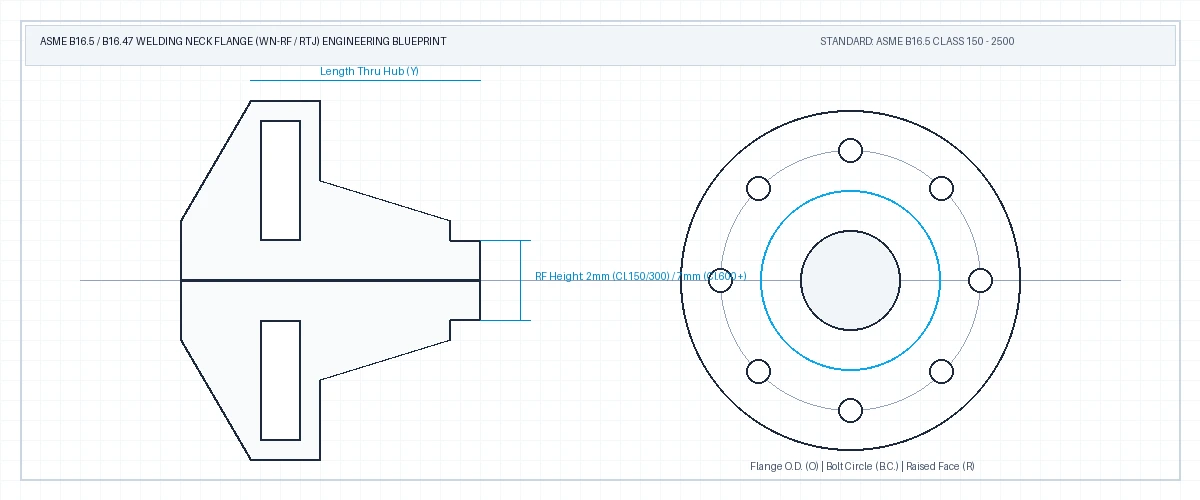
ASME B16.5 and B16.47 / Flange Drilling and Facing
Flange compatibility is decided by three things: the size, the class and the facing. ASME B16.5 fixes bolt circles, bolt hole counts and facings for flanges up to NPS 24, and it is the reference behind almost every plant valve flange.
Above NPS 24 the picture splits, because ASME B16.47 publishes two series that are not interchangeable. A project that specifies a large valve flange without naming the series leaves a decision open that the piping will later close, one way or the other.
The facing is where leaks start
A raised face is the default for most steel flanges. A flat face is used where the mating flange is cast iron or where a full-face gasket is required. A ring joint is used where the pressure and temperature make a soft gasket unreliable.
Ring joint facings are metallic and rely on the gasket ring deforming into the groove. They are less forgiving of misalignment than a raised face, and they require the mating flange to have the matching groove. A valve with an RTJ facing will not seal against an RF flange no matter how tight the bolts are.
Large flanges and the series problem
Above NPS 24, B16.47 Series A and Series B differ in bolt circle and hole count, and both appear in project specifications. API 605 is a related specification that has largely been folded into the same family, and MSS SP-44 sits alongside them.
The practical instruction is simple: on any valve above NPS 24, state the series on the enquiry, or ask the piping designer to state it. Guessing produces a valve that cannot be bolted to the mating flange.
Bolt holes and end flange drilling
A valve's end flanges are drilled to the standard, which means the bolt hole positions are fixed and cannot be adjusted on site. Where a valve is supplied with a drilled end and a companion flange, the two have to be drilled to the same standard, and our valve fittings range exists partly for that reason.
For high-temperature service the bolting material has to be considered separately from the flange material, because the bolts operate at a temperature where their own strength falls.
Flange Reference
| Item | Detail | Note |
|---|---|---|
| Through NPS 24 | ASME B16.5 | Raised face is the working default |
| NPS 26 and above | ASME B16.47 Series A or B, state which | Also seen as API 605 or MSS SP-44 |
| Facing | RF, FF or RTJ | Must match the mating flange exactly |
| Bolt holes | Fixed by the standard per size and class | Cannot be adjusted on site |
| Companion flanges | Supplied drilled to the same standard | Available in our fittings range |
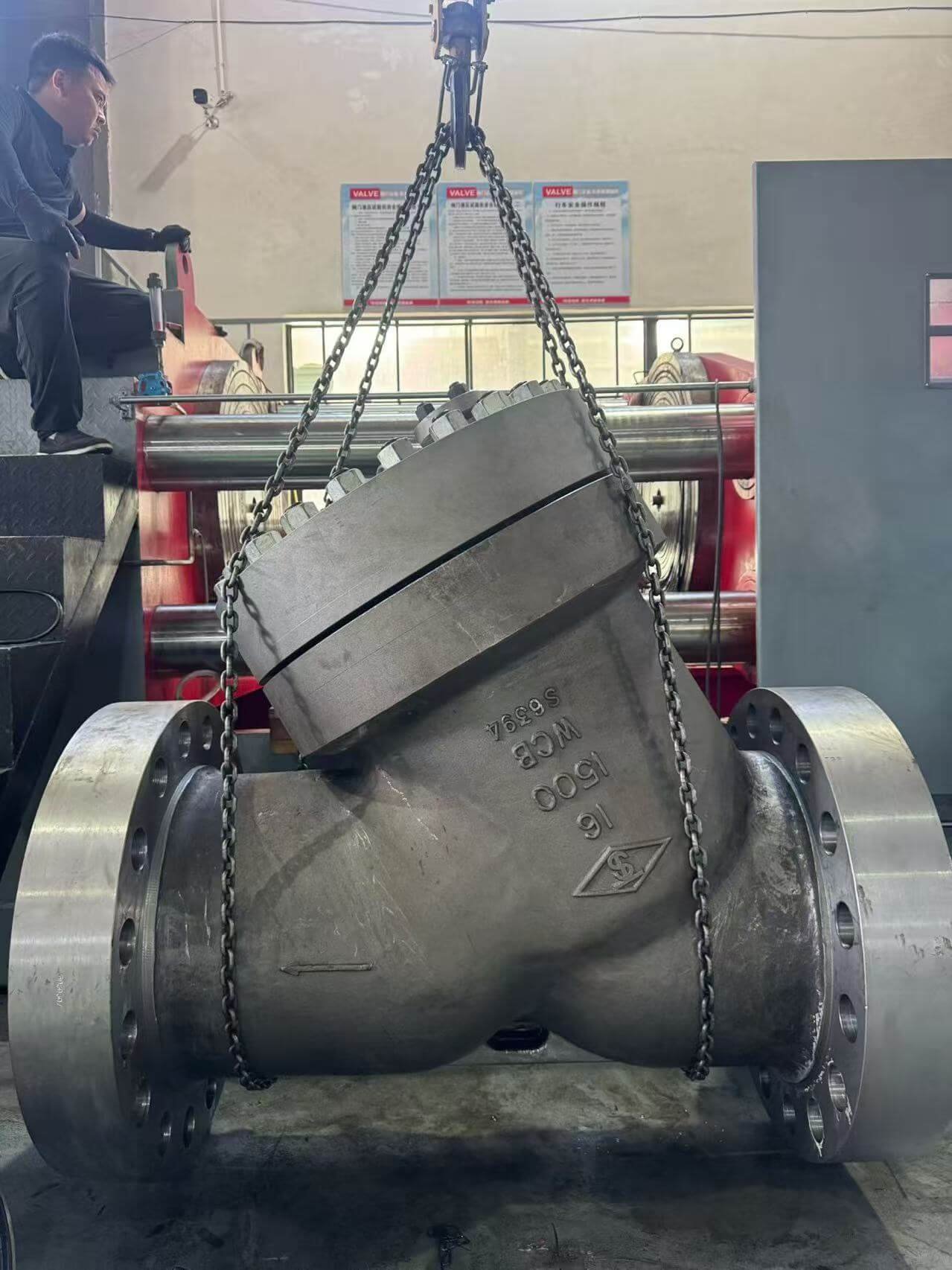
From the works and the projects
Questions this page answers
They are two published flange families with different bolt circles and hole counts for the same size and class. They are not interchangeable, so the series has to be stated on the enquiry.
No. The facings must match. An RTJ valve needs a mating flange with a matching groove; an RF valve needs a flat mating face.
Yes. Valve fittings, including companion flanges and installation items, are supplied with valve packages or as separate line items, consolidated into one shipment.