
Floating Ball vs Trunnion Mounted Ball Valve
Same silhouette, different machine. The difference between a floating and a trunnion ball valve is where the ball is held, and that single decision sets the size limit.
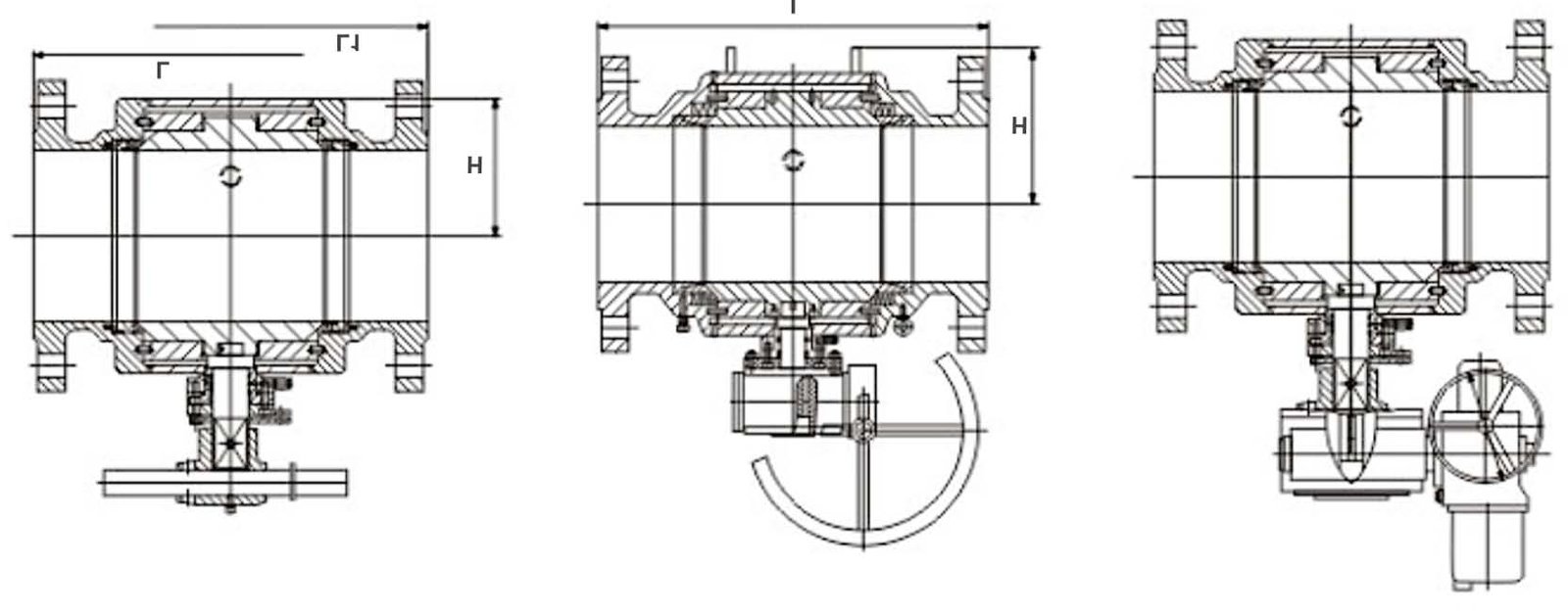
Floating Ball vs Trunnion Mounted Ball Valve
In a floating ball valve the ball is carried by the stem and pressed into the downstream seat by line pressure. That pressure assist is what makes the seal, and it is also what loads the seat, the stem and the operator.
In a trunnion mounted valve the ball is supported top and bottom, so the pressure no longer displaces it. The seats move to the ball instead, and the operating torque drops sharply relative to the bore.
Floating ball against Trunnion mounted
| Aspect | Floating ball | Trunnion mounted |
|---|---|---|
| How the ball is held | By the stem, free to move axially | By a top stem and a bottom trunnion |
| Where the sealing force comes from | Line pressure pushing the ball into the seat | Seat springs plus line pressure on the seat |
| Torque as bore grows | Rises steeply, because the whole ball is loaded | Comparatively flat, because the ball is supported |
| Practical size ceiling | Comfortable on small and medium bores | The normal choice on large bore and high class |
| Double block and bleed | Not normally available in the same form | Available as DBB and DIB-1 builds |
| Actuation | Small actuators on the smaller sizes | Practical to actuate even at large bore |
| Cost | Lower for the same size and class | Higher, and justified by the duty |
Why the size break point exists
A floating ball on a large bore carries a large unbalanced load, and the torque needed to turn it grows with the bore and the differential pressure. At some point the operator, or the actuator that replaces it, becomes impractical.
Different projects put that break point in different places, but in practice most designs settle around six to eight inches for the changeover on general service. Above that, a trunnion valve is usually lighter to operate and kinder to its own seat.
Sealing direction and double block and bleed
A floating ball valve normally seals against the downstream seat and vents the cavity upstream. A trunnion valve can be built to seal in both directions, which is what makes double block and bleed and DIB-1 constructions possible.
If the duty requires positive isolation with a bleed between two seats, the trunnion family is where that design lives. Our DBB and DIB-1 builds are trunnion constructions for exactly this reason.
Where the money actually is
On small sizes the floating valve is cheaper and entirely adequate. Paying for a trunnion on a two-inch line buys capacity that will never be used, and it adds a seat design that has to be maintained differently.
On large sizes the arithmetic reverses. The trunnion valve costs more to buy and costs less to operate, to actuate and to keep sealing, and the seat is not being progressively crushed by the pressure it is holding.
Which one to choose
- Choose floating. Small and medium bore, moderate pressure, manual operation, and simple isolation duty where one-directional sealing is enough.
- Choose trunnion. Large bore, high class, actuated duty, double block and bleed, or any line where the operator torque or the seat loading has become the problem.
From the works and the projects
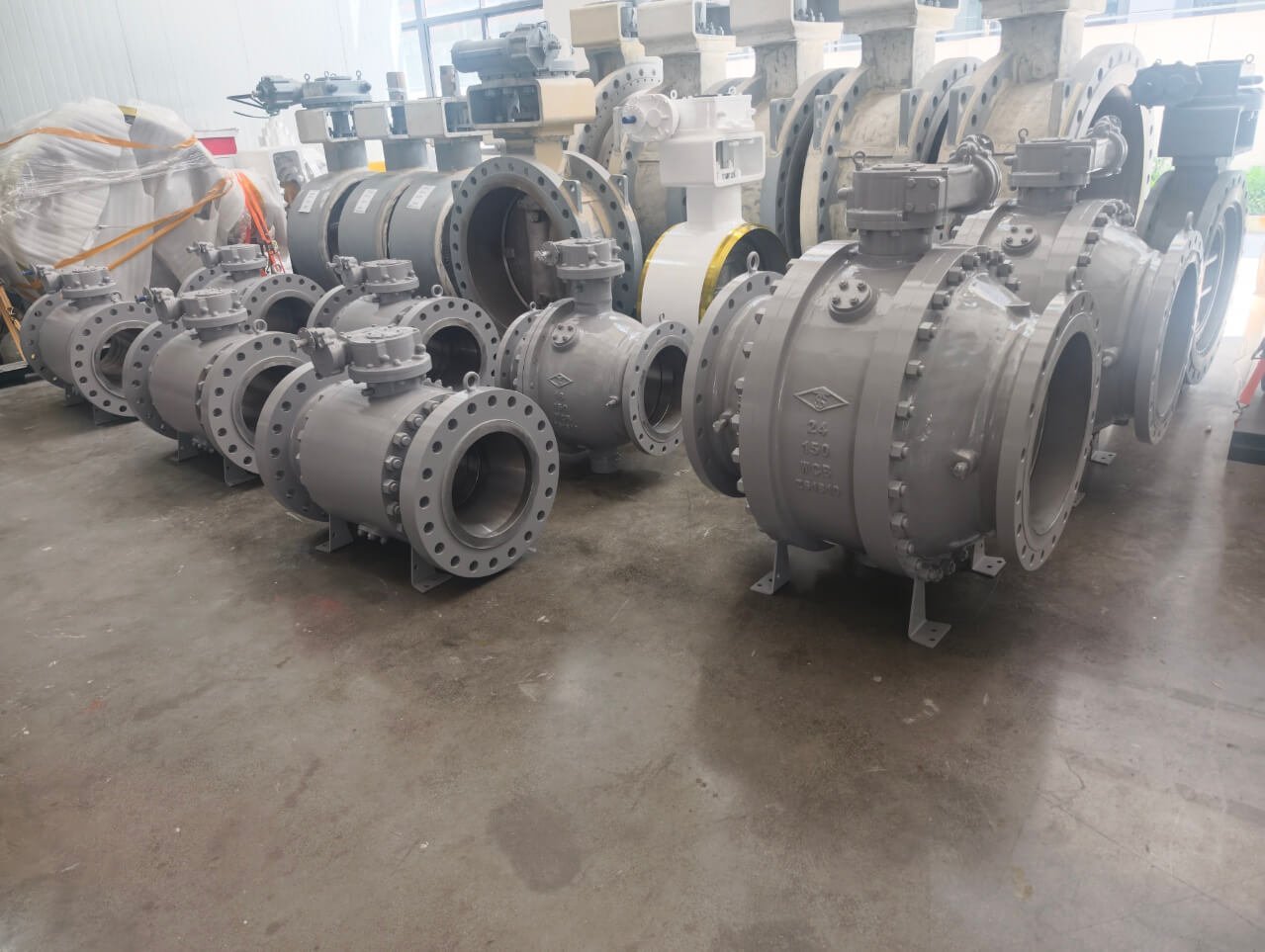
Questions this page answers
There is no single published size. Most projects change over between six and eight inches on general service, and the decision is driven by the operating torque and the pressure class at least as much as by the bore.
Not in the same sense. Positive isolation with a bleed between seats is a trunnion construction, which is why DBB and DIB-1 builds are quoted in that family.
It means the sealing element is loaded in a controlled way and the torque stays manageable. Leak-tightness still depends on the seat material and the surface finish, not on the mounting alone.