
NACE MR0175 / ISO 15156, Materials for Sour Service
In sour service the material is the specification. NACE MR0175 and ISO 15156 exist because wet hydrogen sulphide cracks steels that would be perfectly sound in sweet service.
NACE MR0175 / ISO 15156, Materials for Sour Service
Sulphide stress cracking does not need a defect to start. A hard steel in wet hydrogen sulphide service can crack under stress that would be entirely acceptable in sweet service, which is why sour service is specified by material rules rather than by an inspection routine.
NACE MR0175, now also published as ISO 15156, sets out which materials may be used, in what condition, and with what hardness limits. It is a materials document that reaches into the valve order: the body, the trim, the welds and the bolting all fall inside its scope.
Hardness limits, and why they are specified
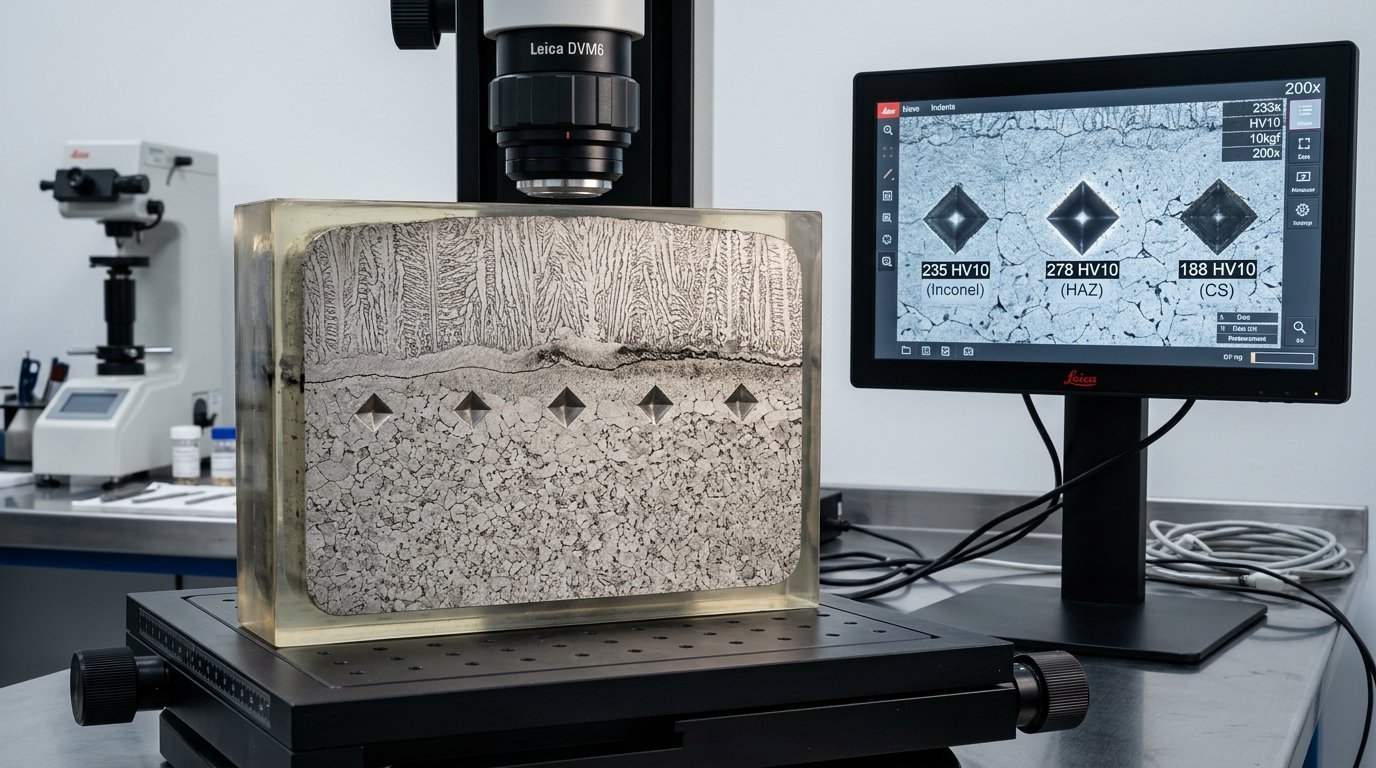
Hardness is used as a proxy for the microstructure that resists cracking. For carbon and low-alloy steels in sour service the accepted ceiling is commonly 22 HRC, and it applies to the material in the condition it is supplied, including any weld or heat-affected zone.
That is why a sour service order includes hardness verification rather than only a chemistry certificate. The chemistry can be correct and the hardness can still be outside the limit after heat treatment or welding.
It applies to more than the body
Trim components, springs, bolting and any welded joint are part of the assessment. A valve with a compliant body and non-compliant bolting is not a compliant valve, and the failure mode of a cracked bolt is worse than a weeping seat.
For the buyer the practical instruction is to state the service conditions rather than only the standard. Partial pressure of hydrogen sulphide, chloride level and temperature all affect which material is acceptable, and the material selection follows from them.
How it changes an order
A sour service order usually adds hardness testing records, restricts the trim and bolting choices, and may change the body material entirely if the partial pressure is high. It is not a coating or a treatment added at the end of manufacture.
Where sour service is an option rather than a certainty, raise it at enquiry stage. Selecting a NACE-compliant material from the start is far cheaper than replacing a body that was made to the wrong specification.
Sour Service Checklist
| Item | Detail | Note |
|---|---|---|
| Service data | H2S partial pressure, chloride, temperature, pressure | Material selection follows from these |
| Body | Grade qualified for the service conditions | Documented per heat |
| Hardness | Within the specified ceiling, typically 22 HRC | Verified on base metal and welds |
| Trim | Materials qualified for sour service | Hardness applies to trim as well |
| Bolting | Qualified material, hardness controlled | Often the item that gets overlooked |
From the works and the projects
Questions this page answers
It sets which materials may be used in wet hydrogen sulphide service, in what condition, with hardness limits and documentation. It is a materials qualification, not an inspection routine.
No. It is a materials and heat-treatment requirement affecting the body, trim, welds and bolting. A coating does not make a non-compliant material compliant.
The service conditions: hydrogen sulphide partial pressure, chloride content, temperature and pressure, plus the standard the project names. Material selection follows from those numbers.