
Concentric vs Double Offset vs Triple Offset Butterfly Valve
The offsets are not marketing. They decide whether the seat rubs on every stroke, and therefore whether the valve survives being cycled.
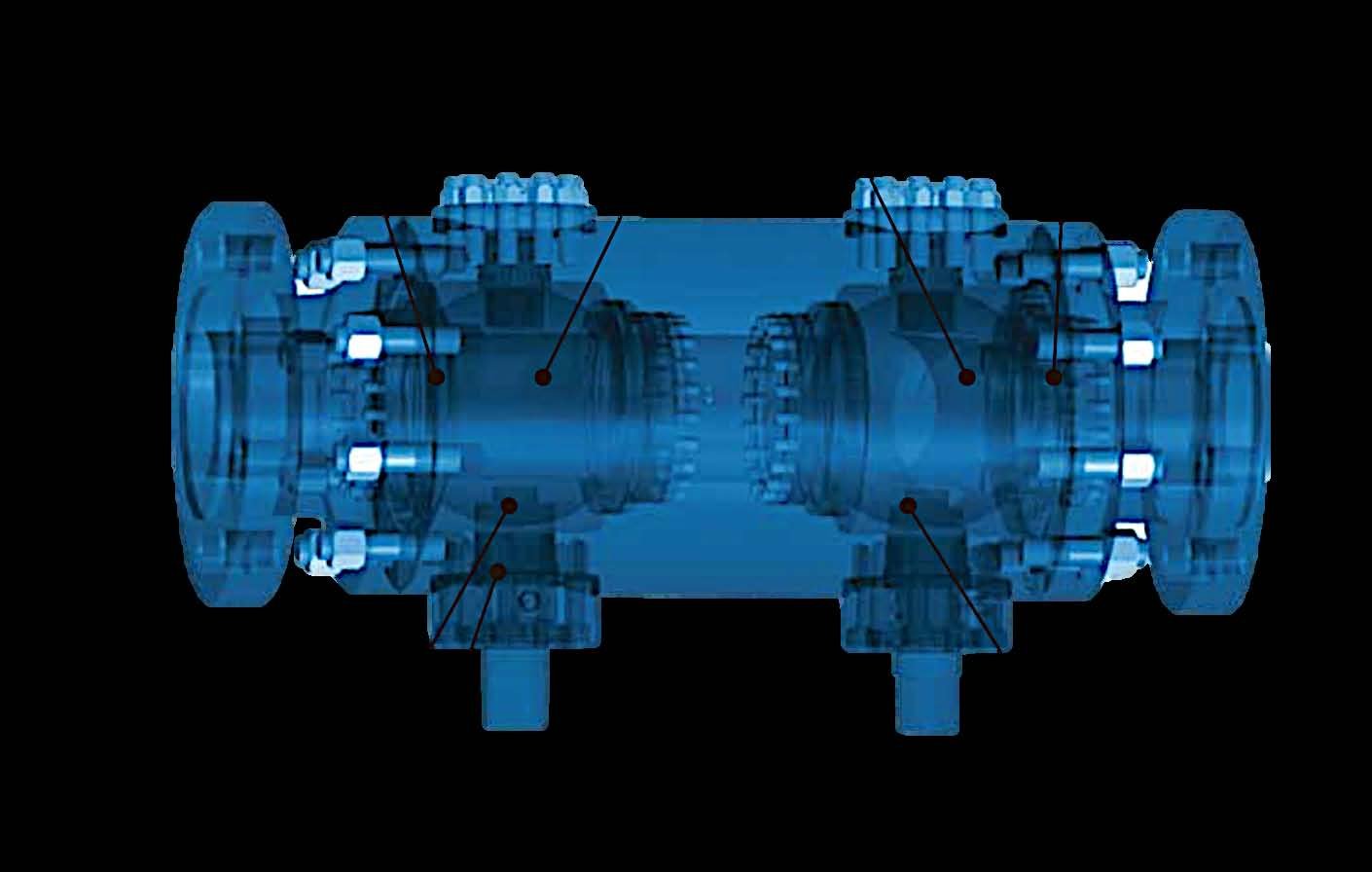
Concentric vs Double Offset vs Triple Offset Butterfly Valve
In a concentric butterfly valve the shaft passes through the middle of the disc, so the seat and the disc are in contact through the whole movement. It is simple, cheap and perfectly adequate for many duties.
Offsets move the shaft away from the sealing plane and the seat is arranged so the disc only touches it at the moment of closure. That is what makes a metal-seated butterfly valve with a long cycle life possible.
Concentric against Triple offset
| Aspect | Concentric | Triple offset |
|---|---|---|
| Shaft position | Through the disc centre | Offset from centreline and from the seat plane, with an inclined cone |
| Seat contact during travel | Continuous, the disc wipes the seat | Only at closure, the disc lifts clear |
| Seat material | Normally resilient | Metal, with a resilient option |
| Temperature ceiling | Set by the polymer seat | Much higher, since the seat is metal |
| Wear over many cycles | Seat and disc edge wear progressively | Minimal rubbing, so cycle life is much longer |
| Torque behaviour | Rises through travel | Falls away as the disc clears the seat |
| Cost | Lower | Higher: geometry, lapping and a metal seat |
Why offsets exist
The first offset moves the shaft off the pipe centreline so the disc edge clears the seat as it rotates. The second offsets the shaft from the seat plane so the disc lifts out of the seat rather than sliding along it.
The third offset inclines the sealing cone so the contact becomes a wedge action that seats uniformly around the circumference. The result is a metal-seated valve that seals tightly and does not grind its own seat away.
Where a concentric valve is still the right answer
On utility isolation where the valve is operated rarely, a concentric resilient-seated butterfly valve is compact, light, cheap and entirely reliable. Paying triple offset prices for a valve that is opened twice a year buys nothing.
The choice only turns when the valve is cycled often, runs at a temperature the polymer cannot take, or is required to seal metal-to-metal for fire-safe or high-temperature reasons.
Torque and actuation follow the geometry
A concentric valve carries the seat friction through the whole stroke, so its torque stays high across the travel. A triple offset valve peaks early and then drops away as the disc clears the seat.
That difference matters when the valve is actuated, because the actuator has to be sized for the worst point in the stroke rather than for the closed position. On a concentric valve used for throttling, the peak can be well away from either end.
Which one to choose
- Choose concentric. Utility isolation, infrequent operation, moderate temperature, and where cost and compactness matter more than cycle life.
- Choose triple offset. High temperature, metal-to-metal sealing, frequent cycling, or any duty where the specification is driven by a fire-safe or high-temperature requirement.
From the works and the projects
Questions this page answers
It inclines the sealing surface so contact becomes a wedge action that seats uniformly around the circumference, which is what allows a metal seat to seal tightly without rubbing on every stroke.
Not necessarily higher overall, but the peak occurs at a different point in the stroke. Actuator sizing has to use the torque at the worst point, not at the closed position.
No. Concentric resilient-seated butterfly valves cover most utility isolation duties well. The offsets pay for themselves when temperature or cycle life becomes the constraint.