
1. The engineering & commercial crossroads: when to cast and when to forge
Every industrial piping requisition presents a balancing act between mechanical reliability, initial capital expenditure (CAPEX), and delivery lead times. The decision between specifying a cast valve body versus a forged valve body is among the most consequential engineering decisions in piping material engineering:
| Item | Detail |
|---|---|
| Cast steel valves | Formed by pouring molten metal into sand or ceramic molds, creating complex single-piece body cavities with optimized flow passages. |
| Forged steel valves | Formed by mechanically compressing heated solid steel billets or ingots under multi-thousand-ton hydraulic forging presses, shaping metal while in solid state. |

2. Metallurgical microstructure comparison: grain flow vs. as-cast dendrites
The performance divergence between castings and forgings begins at the atomic lattice level during solid-state metallurgical transformation:
| Metallurgical Attribute | Forged Steel (ASTM A105 / A182) | Cast Steel (ASTM A216 / A351) | Engineering Significance |
|---|---|---|---|
| Grain Structure & Alignment | Directional, unbroken grain flow aligned along the geometric contours of the valve body and flange hubs. | Non-directional, coarse, random equiaxed and dendritic grain structure with inter-dendritic spacing. | Forgings deliver 25% to 40% higher fatigue life and resistance to thermal shock cycles. |
| Internal Porosity & Cavities | Zero shrinkage cavities. Extreme hydraulic compressive pressure closes all microscopic gas voids. | Subject to shrinkage porosity, micro-cracks, gas bubbles, and center-line shrinkage during cooling contraction. | Castings require Radiographic Testing (RT) to ensure sub-surface sound metal thickness. |
| Tensile & Yield Uniformity | High mechanical ductility, superior reduction of area (≥ 30%), high Charpy impact toughness. | Lower ductility, higher variability in impact toughness between surface and core. | Forgings are far less susceptible to sudden catastrophic brittle fracture. |
| High-Pressure Hydrogen Service | Impermeable crystalline density. Excellent resistance to High-Temperature Hydrogen Attack (HTHA). | Atomic hydrogen gas can migrate through micro-porosity channels, inducing internal blister cracking. | API 941 Nelson Curve services strongly mandate forged bodies for high-pressure H2. |
3. Size & pressure class inflection points: the industry economic matrix
Why aren't all industrial valves forged? The answer lies in tooling capital costs, hydraulic forging press tonnage limits, and raw material weight economy. As valve size increases, the required forging press capacity grows exponentially, making large-bore forgings commercially prohibitive. Industry standard practice establishes clear inflection thresholds:
| Nominal Pipe Size (NPS / DN) | ASME Class 150 / 300 (PN 20 / PN 50) | ASME Class 600 / 900 (PN 100 / PN 150) | ASME Class 1500 / 2500 (PN 250 / PN 420) | API 10,000 / 15,000 psi (Upstream) |
|---|---|---|---|---|
| Small-Bore: NPS 1/2" to 2" (DN 15 - 50) | Predominantly Forged (API 602 / ASME B16.34). Standard closed-die forgings (ASTM A105, A182 F316). | 100% Forged Mandatory. Excellent pressure containment, zero porosity. | 100% Forged Mandatory. Heavy forged bar stock or closed-die forgings. | 100% Forged Mandatory. High-strength alloys (AISI 4130, Inconel 718). |
| Medium-Bore: NPS 2-1/2" to 6" (DN 65 - 150) | Primarily Cast (ASTM A216 WCB / A351 CF8M). Forgings available at 25-35% price premium. | The Sourcing Inflection Zone: Castings standard for general duty; Forgings preferred for sour gas/steam. | Predominantly Forged. 3-piece bolted forged ball and forged globe valves dominate. | 100% Forged. Monoblock forged bodies. |
| Large-Bore: NPS 8" to 24" (DN 200 - 600) | 95% Cast. Sand-cast bodies deliver massive weight and cost savings. | 70% Cast / 30% Forged. High-integrity offshore projects mandate 3-piece forged bodies. | Primarily Forged. Severe wall thickness favors dense forged bodies over thick castings. | Forged blocks only. |
| Ultra-Large-Bore: NPS 26" to 60" (DN 650 - 1500) | 100% Cast or Fabricated Plate. Forging presses cannot accommodate dies. | Cast or Welded Forged Shells. Cast bodies with 100% Radiographic Testing (RT). | Custom multi-piece modular forged rings welded per ASME Section IX. | N/A |
For small-bore piping (≤ 2"), specifying forged valves (API 602) is universally more cost-effective and reliable than casting due to automated high-speed forging presses. For large-bore piping (≥ 8" Class 150/300), cast valves (API 600 / API 6D) represent the standard industry baseline, saving 30% to 50% in CAPEX compared to specialized forged equivalents.
4. Total cost of ownership (TCO) & unit economics
When comparing purchase bids, procurement teams frequently make the mistake of evaluating only the initial valve unit price, completely ignoring the total cost of ownership (TCO) across NDT inspection, machining scrap rates, and shutdown reliability:
4.1 Pattern/die amortization economics
| Item | Detail |
|---|---|
| Casting patterns | Creating a wood or aluminum pattern for a 12" Class 600 cast body costs $3,500 to $8,000. |
| Closed-die forging dies | Fabricating hardened tool-steel closed forging dies for that same 12" valve body costs $45,000 to $90,000. Unless producing hundreds of identical valves, die tooling costs make closed-die forgings cost-prohibitive in large sizes. |
4.2 Non-destructive examination (NDE) cost realities
A "cheap" casting often becomes significantly more expensive than a forging once client quality requirements are enforced:
| Inspection Discipline | Requirements on Cast Steel Valves | Requirements on Forged Steel Valves | Cost & Schedule Impact |
|---|---|---|---|
| Volumetric NDT Testing | Radiographic Testing (RT / X-Ray / Gamma Ray) per ASME B16.34 Mandatory Appendix I. Difficult, hazardous, requires multi-angle exposure. | Ultrasonic Testing (UT) per ASME Section V Article 5. Fast, digital, automated, zero radiation hazard. | 100% RT on an 8" Class 600 cast valve costs $450 to $800 per body, plus 5 to 7 days for film processing and level III interpretation. |
| Surface NDT Testing | Magnetic Particle (MT) or Liquid Penetrant (PT) across all casting junctions, fillets, and hot spots. | MT / PT on machined gasket contact surfaces only. | Castings frequently reveal surface sand inclusions requiring localized grinding and weld repair. |
| Weld Repair Risk & PWHT | ASTM A216 permits major weld repairs if excavation depth exceeds 20% of wall thickness, triggering mandatory Post-Weld Heat Treatment (PWHT). | Weld repairs on base forged bodies are strictly forbidden by most EPC specs; forged bodies are 100% parent metal. | Unplanned casting weld repairs add 2 to 3 weeks of furnace time, risking project delivery penalties. |
5. Production lead times: foundry lead times vs. forged bar stock expediting
In fast-track refinery turnarounds, plant debottlenecking, and emergency shutdown replacements, delivery lead time supersedes price as the decisive commercial selection criterion:
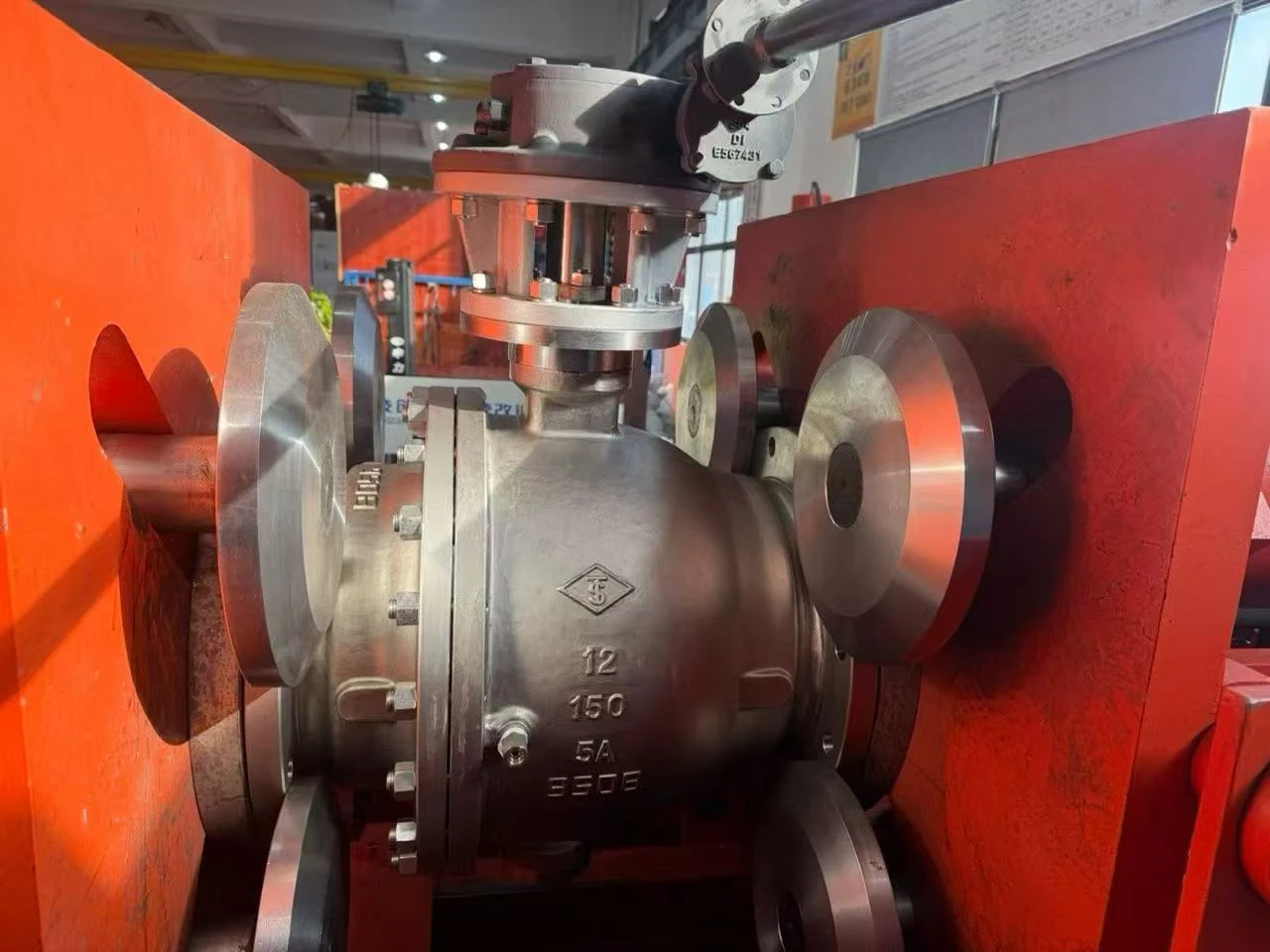
5.1 The standard casting lead-time bottleneck (12 to 18 weeks)
When an EPC places an order for custom cast valves requiring raw foundry pours, the linear manufacturing timeline is lengthy and vulnerable to disruption:
| Item | Detail |
|---|---|
| Pattern verification & mold packing | 1 to 2 weeks. |
| Melt pouring, shakeout & fettling | 2 to 3 weeks (Foundries pour specific alloys like Duplex or Monel only once a month when melt batches accumulate). |
| Heat treatment (normalizing/solution annealing) | 1 to 2 weeks. |
| Radiographic testing (RT) & defect weld repair | 3 to 5 weeks (Foundry defect excavation, weld build-up per ASME Section IX, post-weld heat treatment, and re-radiography). |
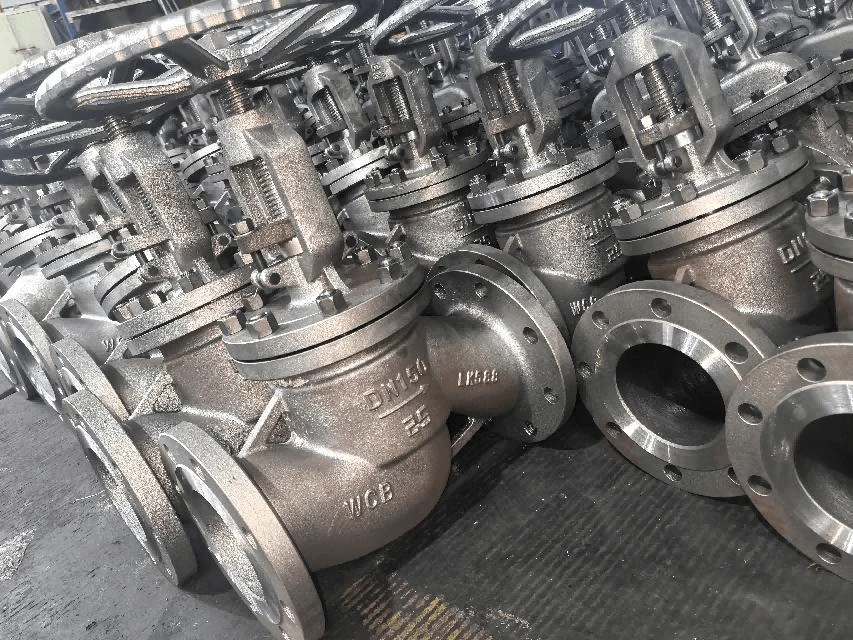
5.2 The forged bar stock fast-track route (3 to 6 weeks)
For urgent shutdown requirements, forged valves provide a revolutionary expediting advantage. Tier-1 manufacturers like TSV Valve maintain massive inventories of pre-certified, pre-tested forged round bars (ASTM A105, A350 LF2, A182 F316L, F51 Duplex) in stock:
| Item | Detail |
|---|---|
| Because forged bar stock is already 100% sound, pre-heat-treated, and ut-scanned, the foundry molding, pouring, and radiographic defect repair cycles are completely bypassed. | |
| The valve body is machined directly from solid forged bar or pre-forged modular 3-piece blocks on multi-axis CNC machining centers. | |
| Total fast-track forged lead time: 3 to 6 weeks. | For a refinery losing $200,000 per day in deferred production during an unplanned shutdown, paying a 25% premium for forged valves to save 8 weeks of lead time delivers astronomical return on investment. |

6. Severe-service performance comparison: where forgings are mandatory
In standard utility piping (cooling water, low-pressure instrument air, municipal effluent), cast valves deliver decades of trouble-free operation. However, in critical and severe industrial services, specifying forged valves is an engineering imperative:
| Severe Operating Service | Recommended Valve Material Form | Failure Mechanism in Alternative Form |
|---|---|---|
| High-Pressure Hydrogen (> 50 bar, > 200°C) | 100% Forged Steel Mandatory (ASTM A182 F11, F22, F316L) | Atomic hydrogen gas diffuses into microscopic casting shrinkage voids, recombining into molecular H2 gas and generating immense internal pressure that causes High-Temperature Hydrogen Attack (HTHA) and catastrophic shell burst. |
| Lethal & Toxic Service (HF Acid, Chlorine, Phosgene) | 100% Forged Monel 400 / Hastelloy C276 with bellows seal | Casting micro-porosity channels can weep invisible toxic vapors past the primary wall, triggering environmental and safety emergencies. |
| High-Cycle Emergency Blowdown (ESD / BDV) | 3-Piece Forged Ball Valves (API 6D) | Rapid pressure depressurization (from 150 bar to atmospheric in seconds) causes severe Joule-Thomson refrigeration down to -46°C alongside violent acoustic vibration. Castings suffer fatigue hot-tear propagation; forgings absorb severe shock loads. |
| Cryogenic LNG (-162°C to -196°C) | Forged Austenitic Stainless Steel (ASTM A182 F316/F304) with extended bonnet | Cast bodies (CF8M) can suffer localized grain boundary micro-fissuring under cryogenic thermal contraction stress, causing seat binding and stem seizure. |
7. The EPC engineering decision matrix (cast vs. forged selection SOP)
To standardize valve material selection across project engineering teams, follow this step-by-step logic gate:
1. Is Nominal Size ≤ 2" (DN 50)?
→ YES: Select Forged Steel (API 602). Forgings are universally superior in quality, cost-competitive, and standardly stocked.
2. Is Pressure Class ≥ ASME Class 900 (PN 150) or Service Critical (H2, Sour Gas, Lethal Fluid)?
→ YES: Select Forged Steel (3-Piece Bolted Body). Guarantees zero porosity, eliminates costly radiography, and complies with severe-service AML specifications.
3. Is Delivery Required in ≤ 6 Weeks for Shutdown / Turnaround?
→ YES: Select Forged Body Machined from In-Stock Bar Stock. Bypasses 12-16 week foundry pouring queues.
4. Is Nominal Size ≥ 4" (DN 100) in Standard Process Duty (Class 150 / 300)?
→ YES: Select Cast Steel (ASTM A216 WCB / A351 CF8M). Delivers optimum CAPEX efficiency. Specify NDT sampling (e.g., 10% RT or 100% MT/PT on critical areas) per project quality tier.
8. TSV Valve's hybrid manufacturing strategy
At TSV Valve (Tiansheng Valve Co., Ltd.), we provide global EPC contractors with the best of both worlds through our flexible dual manufacturing framework:
| Item | Detail |
|---|---|
| Monitored foundry network for high-volume castings | We partner with audited, ISO 9001 and PED-certified foundries using resin-sand molding and automated spectrometer ladle verification. All castings undergo rigorous incoming IQC, visual inspection to MSS-SP-55, and in-house digital ultrasonic or radiographic testing. |
| In-house high-tonnage forging & fast-track bar stock machining | We maintain massive warehouse stocks of certified forged steel billets and bars (A105, A350 LF2, A182 F316L, F51 Duplex, Inconel 625), supported by advanced multi-axis CNC machining bays. We deliver custom severe-service forged ball, gate, and globe valves in turnaround timeframes as fast as 3 to 4 weeks. |
| 100% NDE verification | Whether cast or forged, every TSV valve undergoes 100% hydrostatic and pneumatic pressure testing per API 598 / API 6D with zero permitted leakage, backed by authentic EN 10204 3.1 or 3.2 material certification. |
Need guidance optimizing the commercial and technical balance between cast and forged valves for your upcoming project requisition? Contact our technical engineering team at info@tsvvalves.com for expert material selection support and fast-track quotation.
Related TSV Technical & Sourcing Guides:
- How to Audit a Chinese Valve Manufacturer: The 50-Point Shop-Floor Checklist
- The EPC Valve RFQ & Data Sheet Checklist: 12 Costly Specification Mistakes
- EN 10204 3.1 vs 3.2 Material Test Reports: Detecting Fake MTRs in Valve Procurement
- TSV Quality Control System, Laboratory Accreditations & OXY Approval
- Explore TSV Full Line of Forged & Cast Industrial Valves
9. Frequently asked questions (technical & procurement FAQ)
Looking for Fully Certified API 6D Industrial Valves with 100% Traceability?
TSV Valve manufactures severe-service ball, gate, globe, check, and control valves with full in-house NDT, EN 10204 3.1/3.2 certification, and global AML prequalification.