
API 6D, Pipeline and Manifold Valves
API 6D is the specification most often named on pipeline enquiries. It is written for the valve as a pressure-containing assembly, not just as a body shape.
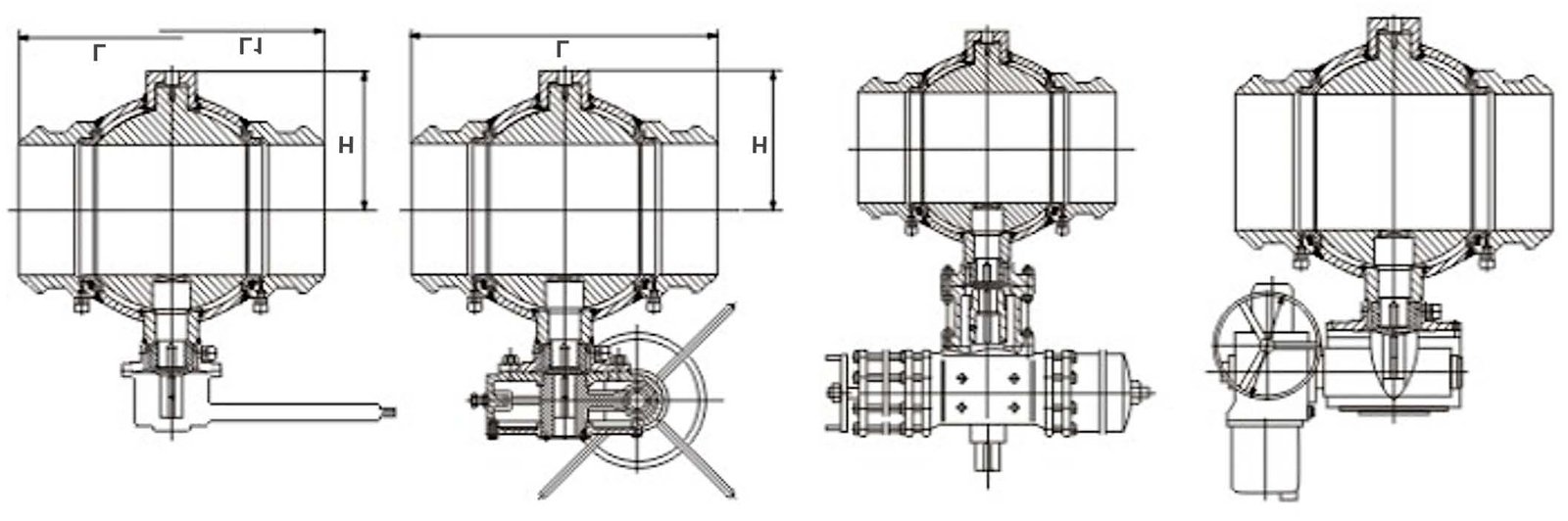
API 6D, Pipeline and Manifold Valves
API 6D covers valves used in pipeline and manifold service: ball, gate, check and plug designs, in sizes and classes that match line-pipe practice. It is a specification rather than a single test standard, which is why a 6D valve is quoted as a package of requirements rather than a single feature.
The practical consequence for a buyer is that API 6D pulls in several other documents by reference. Design pressure-temperature ratings usually come from ASME B16.34, face-to-face dimensions from ASME B16.10, and the pressure test from API 598. When a specification sheet simply says "to API 6D", those are the tables the factory will be working from.
What API 6D actually covers
The specification addresses pressure-containing design, materials, welding where applicable, marking, and the tests a valve must pass before it leaves the works. It also sets requirements on the operating mechanism, on the strength of the stem and on the sealing of the body-to-bonnet joint.
Because the document is aimed at pipeline duty, it assumes the valve may be buried, may be operated after long periods of inactivity, and may be expected to seal tight against a pressure differential in either direction. Requirements on full-bore opening and on the anti-static path follow from that.
How it differs from API 608 and API 600
API 608 covers flanged and butt-welded steel ball valves as a product standard, while API 6D treats the same product family in pipeline service. API 600 covers flanged and butt-welded steel gate valves and is the usual reference for refinery and power isolation gates.
A simple way to think about it: API 608 and API 600 describe the product, API 6D describes the product plus the pipeline expectations around it. Where a buyer needs fire-safe behaviour, the fire test itself is a separate document, either API 607 or API 6FA.
What a buyer should verify on the certificate
The certificate number has to be checkable against the issuing body, not just legible in a photograph. Ask for the certificate scope, which valve families, which sizes, which pressure classes, because a certificate is issued for a defined range, not for everything a factory makes.
It is also worth asking when the certificate expires and which revision of the standard it was issued against. A valve built to the current edition is easier to defend in a project review than one built to a superseded edition, even when the physical difference is small.
Where TSV applies it
Our trunnion-mounted ball valves for pipelines, DBB and DIB-1 builds for terminals, and the larger gate and check valves intended for transmission duty are quoted against API 6D. Sizes, classes and materials for each family are listed on the family page.
Api 6D In Practice
| API 6D IN PRACTICE | |
|---|---|
| Written for | Pipeline and manifold valves, not general plant valves |
| Ratings pulled in | ASME B16.34 for pressure-temperature, ASME B16.10 for face-to-face |
| Pressure test | API 598, shell and seat, on every valve |
| Fire-safe behaviour | Separate test: API 607 or API 6FA |
| Certificate check | Issuing body, scope of valves covered, expiry, edition |
From the works and the projects
Questions this page answers
No. A certificate is issued for a defined scope of valve types, sizes and classes, and the certificate states that scope. Ask for the scope document, and the certificate cover page.
They overlap but are not the same. API 608 is a product standard for flanged and butt-welded steel ball valves; API 6D is the pipeline and manifold specification, and it adds requirements around the operating assembly and pipeline service.
Not necessarily. Plant-side ball valves are often quoted to API 608 and gate valves to API 600. API 6D matters most where the valve sits on a pipeline, a manifold or a terminal, or where the project document names it.