
API 600, Steel Gate Valves, Flanged and Butt-Welded
API 600 is the reference behind most large steel gate valves quoted for refinery and power duty. It sets the wall thickness, the trim options and the pressure test.
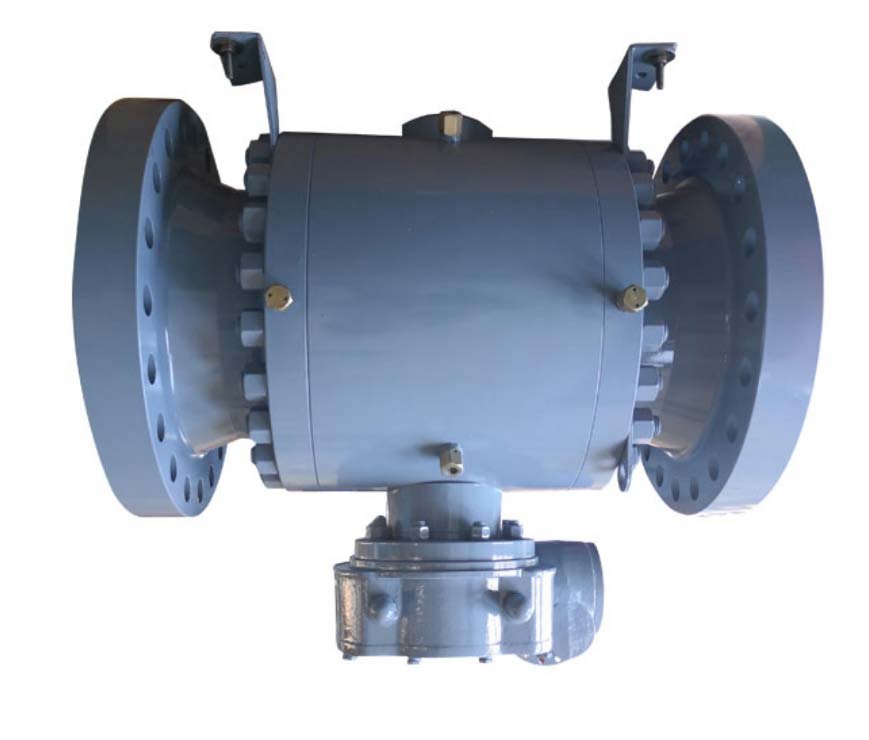
API 600, Steel Gate Valves, Flanged and Butt-Welded
API 600 is a product specification. It tells a manufacturer how heavy the body and bonnet must be for a given size and class, how the disc and seat may be arranged, how the stem is protected and how the valve is tested. Its most useful function for a buyer is that it removes the guesswork about wall thickness.
Two valves can carry the same size, the same class and the same material marking and still differ substantially in weight and service life. API 600 is the document that makes those differences visible, because the minimum dimensions are published rather than negotiated.
Wall thickness is the point
A gate valve that is thin on the body wall will pass a short pressure test and then fail years later on a line that sees thermal cycling or water hammer. API 600 sets the minimum wall, which is why an API 600 valve is normally heavier than a look-alike sold without a specification reference.
When comparing quotations, ask for the valve weight or the body wall thickness and compare it against the API 600 table for that size and class. The answer separates a specification build from a catalogue approximation very quickly.
Trim and seating
The trim is the set of parts that touches the medium: disc, seat faces and stem. API 600 works with the standard industry trim numbering, so a trim number on a drawing is a defined combination of materials rather than an adjective.
Renewable threaded seats are usual on the smaller sizes, with welded seats available where the service makes them preferable. A back seat on the stem lets the packing be replaced with the valve in the line, which matters on a line that cannot easily be taken out of service.
Where API 600 stops
API 600 is not a fire-test standard, and it is not a fugitive-emission standard. If a project requires certified fire-safe performance, the applicable test is API 607 or API 6FA carried out on the actual design. If it requires a measured emission limit, that is a separate test against the project's own criterion.
It also does not cover the small forged-steel gate valves used on instrument and drain lines; those are covered by API 602 and sized quite differently.
Refinery Gate Valve Selection
| Item | Detail | Note |
|---|---|---|
| Body wall | To the API 600 minimum for the size and class | The usual place a cheap quotation saves money |
| Trim | Standard trim numbering, stated on the drawing | Trim number is a defined combination of materials |
| Seat | Renewable threaded seat as standard, welded optional | Service and size decide |
| Back seat | Present, so packing can be renewed in line | Confirm on the datasheet |
| Pressure test | API 598 shell and seat | Every valve, not a sample |
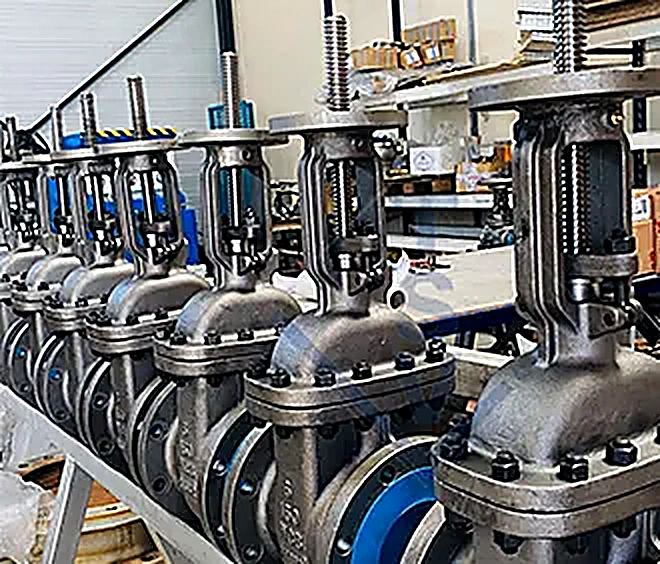
From the works and the projects
Questions this page answers
Usually, yes, because API 600 sets a minimum wall thickness that a thin build cannot meet. Comparing weights for the same size and class is the quickest check.
API 600 itself is not a fire-test specification. Fire-safe behaviour is demonstrated separately under API 607 or API 6FA on the specific design.
Our cast steel gate valve range runs from 1/2 inch to 48 inch in classes 150 to 2500, with flange or butt-weld ends. The family page lists the full range.