
Noise and Vibration from a Valve
Valve noise is diagnostic. The character of the sound points at the mechanism, and the mechanism points at the fix.
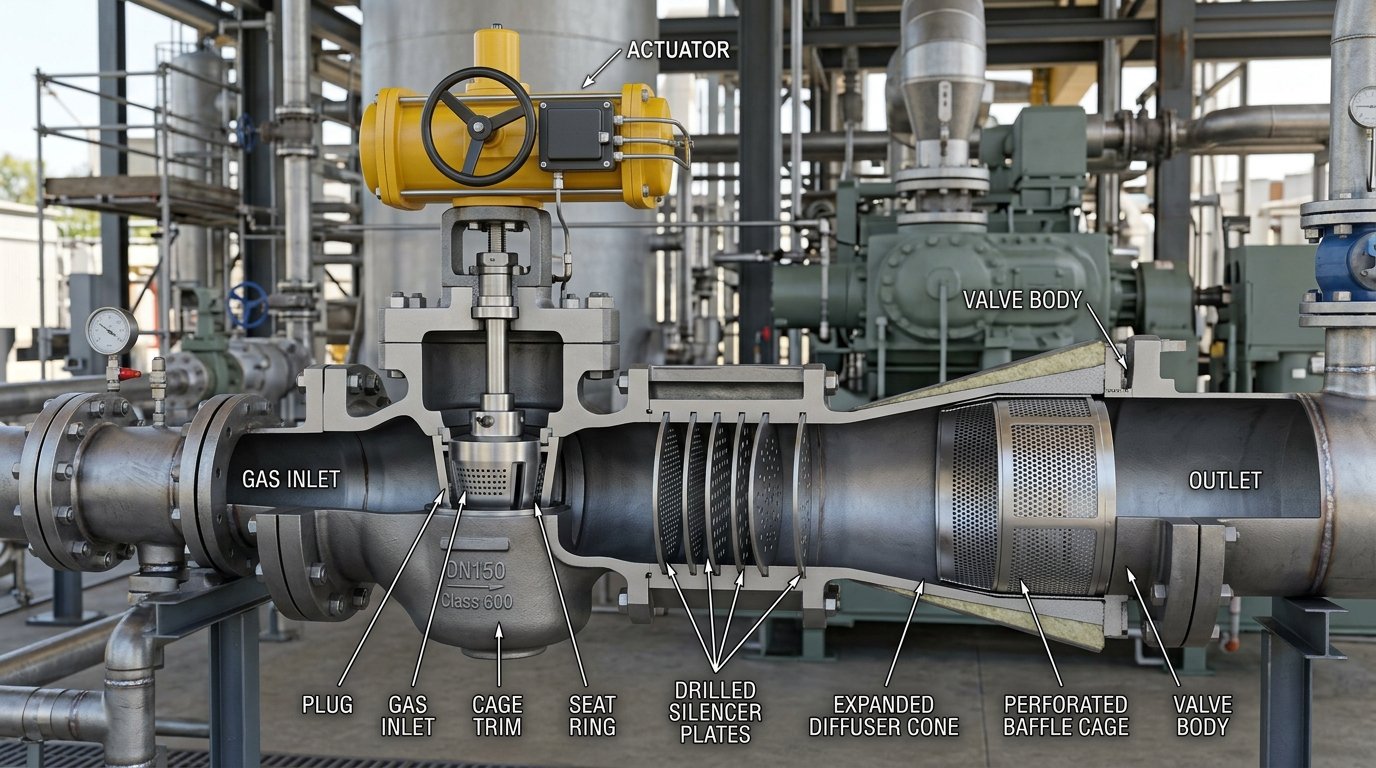
Noise and Vibration from a Valve
Valve noise is diagnostic. The character of the sound points at the mechanism, and the mechanism points at the fix.
What it looks like on site
Sustained noise from a valve, with or without pipe vibration, that was not present at commissioning.
The causes, in order of likelihood
- Cavitation. Bubbles collapse against metal, producing a rattling or gravel-like sound at high frequency.
- Choked flow. The velocity at the seat reaches sonic conditions, producing a broadband roar.
- Mechanical vibration. A part-open disc or plug oscillates in the flow, producing a lower-frequency buzz.
- Resonance with pipework. The valve's noise frequency matches a pipe or support natural frequency and is amplified.
- Check valve chatter. A check valve closure hovering in the flow produces a rapid, regular tapping.
Read the character of the sound
A gravel-like rattle points at cavitation, and the fix is in the pressure staging. A sustained roar with no rattle suggests choked flow, where the velocity itself is the problem and the answer is usually a larger trim or a change of valve type.
A lower-frequency buzz that varies with flow suggests a mechanical oscillation, and a noise that appears at one particular flow rate rather than across the range is a resonance signature.
Where it is worst is the clue
Noise that is loudest at the valve points to the valve. Noise that is loudest some distance downstream, at a fitting or a support, points to a resonance excited downstream of the valve.
Checking whether the pipe itself is vibrating, and whether the vibration is worst at a support or a branch, separates the two cases. The fix is different in each.
Noise is a symptom of energy
Every one of these mechanisms converts pressure energy into sound and vibration, which means the noise is a warning that pressure energy is being dissipated somewhere it was not designed to be. Removing the noise without removing the mechanism means the energy is still there.
The engineering answer is to change where and how the pressure drop occurs: a low-noise or staged trim, a different valve type, or a change in the operating condition. Noise treatment applied to the pipework reduces the sound without addressing the cause.
Noise Signatures
| Item | Detail | Note |
|---|---|---|
| Gravel-like rattle | Cavitation | Stage the pressure drop; anti-cavitation trim |
| Sustained roar | Choked flow at the seat | Larger trim or a different valve type |
| Low-frequency buzz, varies with flow | Mechanical oscillation of the closure | Check the disc or plug stability |
| Worst downstream, pipe vibrating | Resonance | Review supports and branch connections |
| Regular rapid tapping | Check valve chatter | Check flow velocity and closure type |
The checks, in order
Note the character of the noise
Rattle, roar, buzz or tapping.
Note where it is loudest
At the valve or downstream of it.
Check the flow rate at which it starts
One flow rate suggests resonance; a range suggests a mechanism.
Check the process conditions
Pressure drop, temperature and whether the flow is below the design case.
Review the trim
Staging is the usual answer to cavitation and choked flow.
From the works and the projects
Questions this page answers
It is a symptom. The mechanism producing it can damage the trim, the body and downstream pipework, so the cause matters more than the level.
It reduces the sound but leaves the mechanism in place. The pressure energy is still being dissipated in the same way.
Because the valve is now operating away from its design point, often at a much larger pressure drop. That is the classic condition for cavitation and choked flow.