
API 607 / ISO 10497, Fire Testing of Quarter-Turn Valves
A fire-safe valve is not a valve made of steel. It is a valve that still seals after the soft parts have been destroyed, and that has been tested to prove it.
API 607 / ISO 10497, Fire Testing of Quarter-Turn Valves
The fire test is a destructive sequence, not an inspection. The valve is pressurised, subjected to a defined high-temperature exposure, allowed to cool, and then operated and pressure-tested again with the soft parts already consumed. What is being measured is whether the metal backup can still seal when the seat has gone.
That is why a fire-safe claim cannot be inferred from the material list. Two valves built from identical grades can behave differently once the seal is gone, because the difference is in the geometry of the secondary seat, not in the chemistry.
What the test sequence actually does
API 607 applies to quarter-turn valves and ISO 10497 is the equivalent international test. Both burn the valve, then require it to be operated and to pass a leakage test afterwards, with the permitted leakage set by the standard and reported.
The burn damages exactly the parts a buyer normally relies on. A valve that passes has some other path to sealing: a metal-to-metal secondary seat, a graphite seal, or a body-to-bonnet joint that does not depend on a polymer gasket.
Reading a witness certificate
Fire test certificates are often issued by a third party who witnessed the test. The document that matters names the testing body, the standard and edition, the exact valve tested, and the range of valves the result is judged to cover.
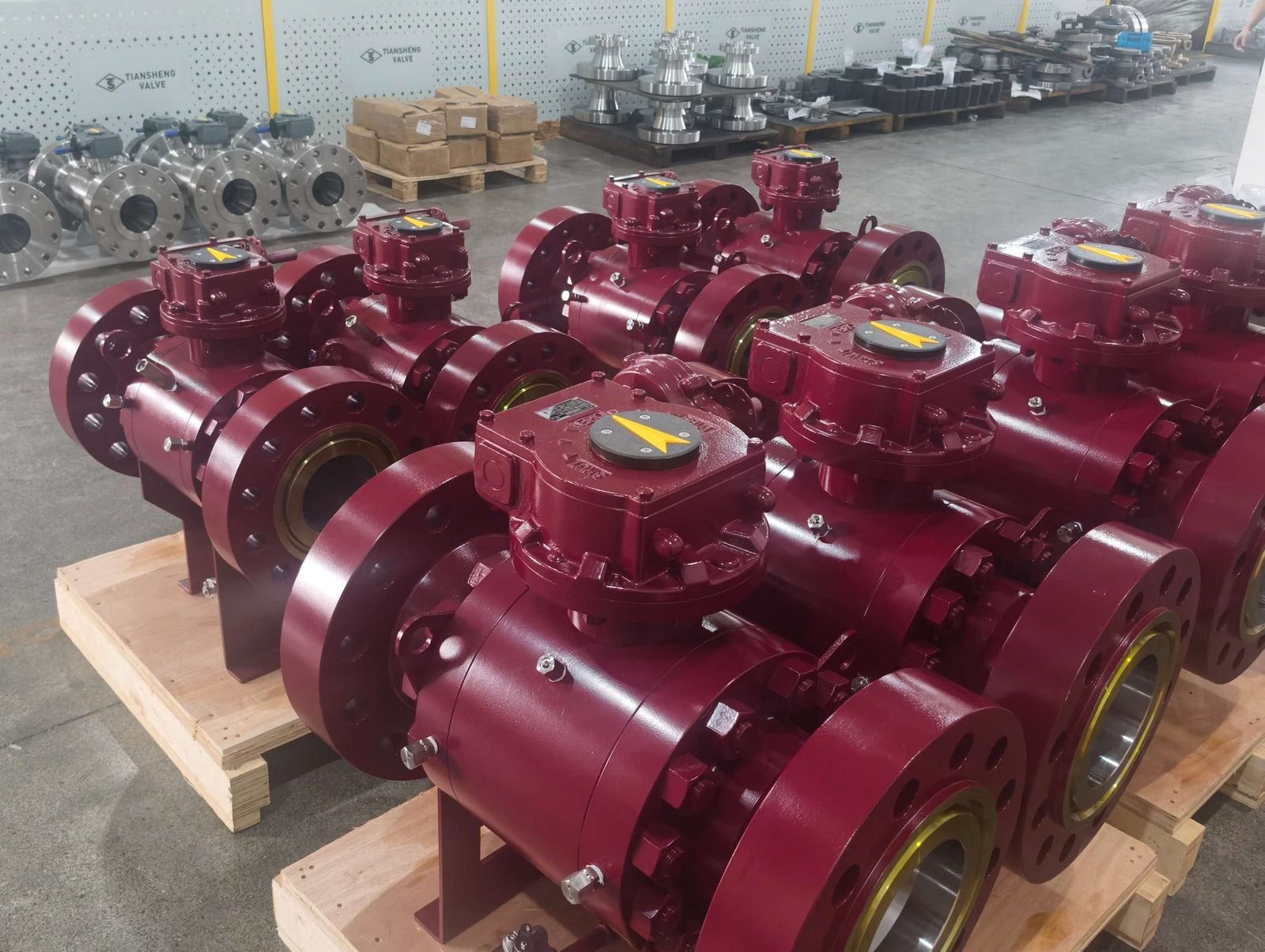
Our DNV document, SHA/872728/1301-677, records an API STD 607 sixth edition witnessed test on an 8-inch Class 600 trunnion-mounted ball valve with RF flanged ends in A105, and sets the qualified scope at NPS 8 and above for Class 600, 800 and 900. A separate ECM certificate, 1N230925.ZTVCD94, covers a 2-inch ball valve. The scope statement is the useful part: it tells you which valve in your order the certificate actually speaks for.
What fire-safe does not mean
It does not mean the valve will be functional after a prolonged fire, nor that it will remain operable by hand. It means the design has demonstrated a defined level of sealing after a defined exposure, tested by a defined procedure.
It also does not replace the requirement for a soft seat where the normal-duty performance matters. Most fire-safe designs pass the ordinary seat test as well; the fire test is an additional qualification on top of normal service.
Fire Test At A Glance
| FIRE TEST AT A GLANCE | |
|---|---|
| Standard | API 607 (quarter-turn), ISO 10497 (international equivalent) |
| Sample | The valve is destroyed by the test |
| Measures | Sealing and operability after the soft parts are consumed |
| Certificate value | The witness, the edition, and the qualified valve scope |
| Not claimed | Survivability of a prolonged fire or hand operation afterwards |
From the works and the projects
Questions this page answers
It should also pass the ordinary seat test, but the two qualifications are separate. The fire test demonstrates post-fire sealing; normal leak-tightness is demonstrated by the API 598 seat test.
It states which valve sizes, classes and designs the tested result is judged to cover. A certificate for one size does not automatically cover every size the factory builds.
The DNV-witnessed API 607 sixth edition test covers an 8-inch Class 600 trunnion ball valve with a qualified scope of NPS 8 and above at Class 600, 800 and 900. An ECM certificate covers a 2-inch ball valve. Both are downloadable from the certificates page.