
Ball Valve Passing When Closed
A ball valve that will not shut off is usually one of five things, and four of them can be identified without opening the line.
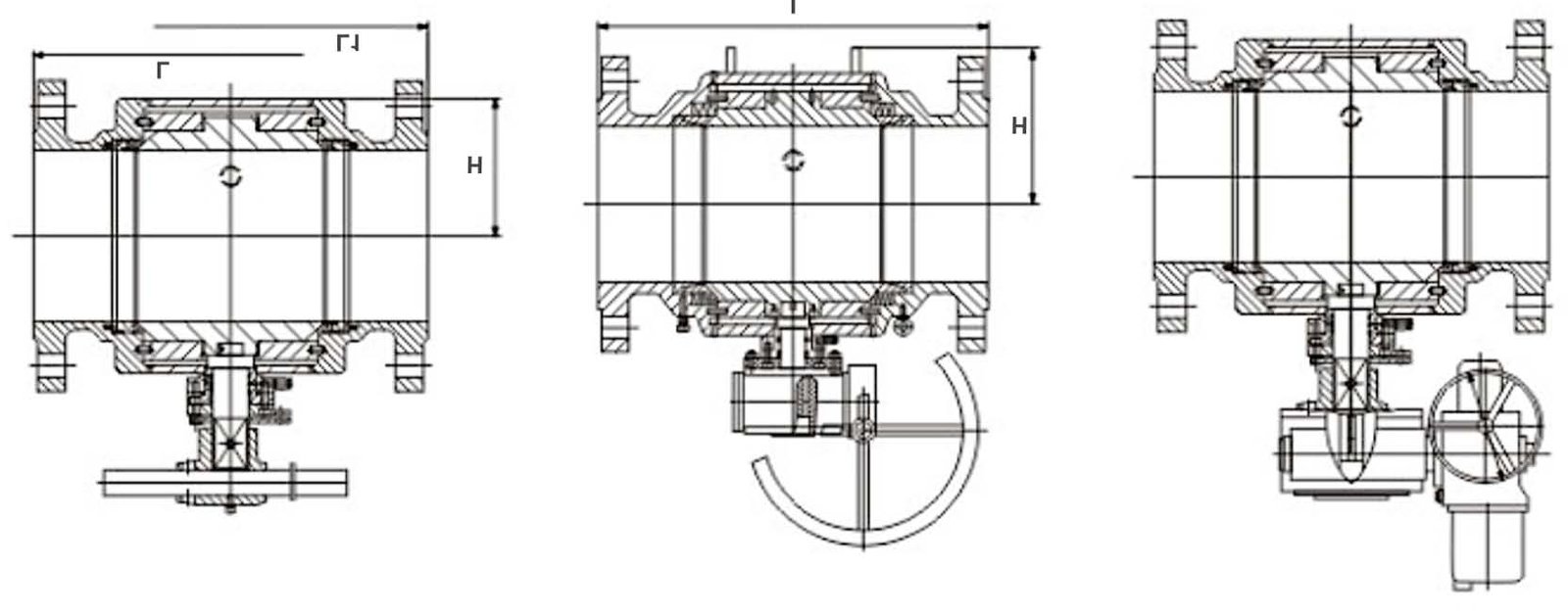
Ball Valve Passing When Closed
A ball valve that will not shut off is usually one of five things, and four of them can be identified without opening the line.
What it looks like on site
The valve is fully closed and there is still flow or a pressure rise downstream.
The causes, in order of likelihood
- Debris on the seat. Scale, weld spatter or a line pig fragment lodges between ball and seat, holding the sealing faces apart by the thickness of the particle.
- Seat scored or cut. Wire drawing across a partly open valve, abrasive solids, or a hard particle dragged across the seat on the last stroke.
- Incomplete travel. The actuator or gearbox stops short of the fully closed position, so the ball never contacts the seat properly.
- Wrong sealing direction. A single-seat design installed so that line pressure pushes the ball away from the seat instead of into it.
- Thermal distortion. The seat or the ball distorts at temperature, so a valve that sealed during testing passes when hot.
Separate the causes before opening the line
Check travel first. On an actuated valve, confirm the closed position indicator and, where possible, the actual ball position against the mechanical stop. An actuator that was set up at ambient and never re-checked after the first thermal cycle is a common culprit.
Check direction second. Compare the flow arrow and the pressure direction against the seat arrangement, particularly on a single-seat valve that was specified for bidirectional duty it does not have.
Debris and seat damage
If travel and direction are correct, the cause is almost certainly on the sealing surfaces. A valve that began passing immediately after a shutdown, a line modification or a strainer bypass is usually holding debris.
A valve that has passed progressively, or that passes only in one direction, is more likely to have a scored seat. On soft seats the damage is visible; on metal seats it shows as a bright line or a lapped-in mark on the seat face.
What to do about it
On a soft-seated valve the seat can often be replaced without replacing the valve, and the seat is a supplied spare. On a metal-seated valve, lapping may restore the surface where the damage is superficial, and replacement is the answer where it is not.
Where the valve is on a line that cannot be opened, an upstream strainer installation is the durable fix rather than a habit of operating the valve through debris.
Symptom → Cause
| Item | Detail | Note |
|---|---|---|
| Passes immediately after a shutdown or modification | Debris on the seat | Strainer, flush, then re-test |
| Passes progressively over months | Seat scoring or erosion | Inspect and replace or lap the seat |
| Passes only when hot | Thermal distortion of seat or ball | Review seat material and clearance for the temperature |
| Never sealed from the start | Travel, direction, or wrong specification | Check the stops and the drawing before the valve |
| Passes in one direction only | Seat direction versus installation | Compare the arrow and the seat design |
The checks, in order
Confirm the valve is actually closed
Check the position indicator, the mechanical stop and, where accessible, the stem flat against the drawing.
Confirm the flow direction
Compare the body arrow, the piping and the seat arrangement on the datasheet.
Isolate and vent both sides
Prove the leak is through the seat rather than past a body joint or a flange.
Test with clean fluid if possible
A valve that seals on clean fluid and passes on process fluid is holding debris.
Inspect the seat and ball
Look for embedded particles, scoring and lapping marks on the seat face.
From the works and the projects
Questions this page answers
Soft seats can often be replaced in line where the valve is designed for it. Metal-seated lapping is a workshop operation, so the valve normally has to come out.
Because construction debris and scale reached the seat during the flush. A strainer ahead of the valve is the durable prevention.
No. Debris, travel adjustment and seat replacement account for most cases, and only seat or ball damage beyond lapping requires a new valve.